The Union finance ministry and the labour and employment ministry are at loggerheads yet again on matters related to the finances of the Employees’ Provident Fund Organisation (EPFO). The EPFO is one of the world’s largest social security organisations, having over 170 million accounts and over 60 million active members. In February this year, the EPFO’s apex decision-making body — its Central Board of Trustees — decided that for 2018-19, the EPFO would raise the interest rate to 8.65 per cent — up from 8.55 per cent in 2017-18. This is higher than the returns of other pension products such as the Public Provident Fund. But the finance ministry has now questioned the EPFO about the true status of the surplus funds available in the kitty. To be sure, any decision on the interest rate has a direct bearing on the surplus. For instance, it has been reported that, at 8.65 per cent, the estimated surplus will be Rs 152 crore, but if the EPFO leaves its interest rate unchanged at 8.55 per cent, the surplus will be considerably more — Rs 771 crore.
The finance ministry is also worried about the true state of EPFO finances. Last week, it asked the labour ministry whether the EPFO had enough funds to pay the higher interest rate for 2018-19. The question that has been raised is why the “surplus” (after payout of the EPF interest rate for previous years) has been shown only in the EPFO’s “estimates” and not in the “actuals”. Complicating matters further is the EPFO’s exposure to firms and investments that could turn bad. One instance of this is the exposure to the securities of Infrastructure Leasing & Financial Services (IL&FS). According to the 57th report of the Standing Committee on Labour, submitted to Parliament in February, the EPFO’s investment in IL&FS was estimated at Rs 575 crore. At that time, the Standing Committee had alerted the labour ministry that if these investments turned bad, the EPFO’s beneficiaries (the formal sector workers) would lose out. The fact is that if the losses can’t be covered by the EPFO’s surplus, the finance ministry would have to step in and make up for the loss.
Thus, the finance ministry is justified in asking the labour ministry for clarifications, and the EPFO must respond. But the larger issue is whether the EPFO can keep paying a rate that is out of sync with the markets and is unsustainable. The way in which the EPFO financed its high payouts in the past has been opaque, bearing little relation to its earnings. This cannot continue. The second issue is whether the EPFO has the managerial acumen to manage such a large pool of money. While almost half the EPFO funds are invested in securities of the Central and state governments, which are relatively safe if held till maturity, the balance is deployed in debt issuances of banks, financial institutions and companies, with a small portion invested in equities through exchange-traded funds. This requires professional fund managers with the ability to invest a large pool of money across risk classes to minimise risk and maximise returns in a highly volatile market environment. The absence of that can hurt the EPFO badly.

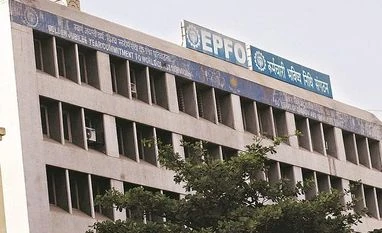 "Unreal rate")












 Connect with us on WhatsApp