3 min read Last Updated : Feb 18 2020 | 9:07 AM IST
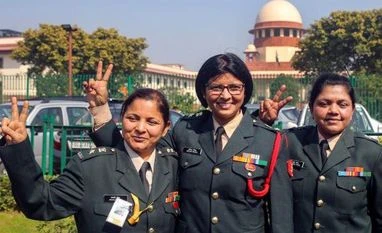
India’s military has a well-deserved reputation of being a meritocracy that treats its members equally, irrespective of religion, caste, or colour. Unfortunately, it has never been gender-neutral, steeped, like most militaries worldwide, in patriarchal notions of gender roles. As a consequence, even though women were allowed to serve as officers since 1992, their terms of service have remained severely circumscribed, especially compared with their male counterparts. The Supreme Court’s judgment on Monday goes a long way towards levelling the playing field.
In its essence, the court has addressed a petition by a group of 332 women officers challenging the terms and conditions of service imposed arbitrarily by the defence ministry in 2006. In that, the government permitted women to serve for 14 years (as against just five years earlier), but denied them eligibility for permanent commission (PC), which would allow them to continue serving for 20 years, by when they would be eligible for a pension. The judgment now allows women officers to opt for PC, whichever stage of service they are in. It also removes the bar the government has imposed on women tenanting command appointments, allowing them to command military units.
The rationale presented by the defence ministry to argue for restrictions on the role of women officers makes for depressing reading. It argues that the military is not just a profession but a “way of life” that requires sacrifices and commitment, which women officers would find a challenge “owing to their prolonged absence during pregnancy, motherhood and domestic obligations …” The government went on to argue that soldiers rely heavily on physical prowess in combat and that “inherent physiological differences between men and women” make it a challenge for women to command military units — even non-combat units. The argument against women also cites “minimal facilities for habitat and hygiene” in forward posts. Women, the government goes on to argue, “have a negative impact on unit cohesion”. The apex court has done well to dismiss this deeply entrenched misogyny with the observation that this is a stereotypical and constitutionally flawed notion and that assumptions about women in the social context of marriage, family, and society are not a constitutionally valid basis for denying equal opportunity to women officers.
The judgment has found merit in the argument that the army’s hierarchy must begin accepting women as equal colleagues. It has noted that, over the last 26 years, women officers of all ages and service profiles have been posted to sensitive places, including tough field areas, and that they have performed excellently for the most part. The only persuasive logic that the defence ministry deployed was that changing the terms of women officers’ service from Short Service Commission (SSC) to PC would militate against the findings of the Ajay Vikram Singh Committee, which sought to create a leaner permanent cadre of officers, supplemented by an enhanced SSC cadre, to serve a few years and then go home without competing for higher ranks. It was calculated that the PC: SSC ratio should be 1:1.1, in order to reduce the army’s worryingly pyramid-like promotion structure. Currently, that ratio is skewed at an unsustainable 3.98:1. The induction of hundreds of women officers from the SSC into the PC cadre will skew the promotion pyramid further. This, however, could be managed, since women officers constitute just 4 per cent of the overall officer strength.