Leasing a car offers convenience but comes at a cost: All you need to know

Business owners get to benefit more as they can claim entire money paid as business expense
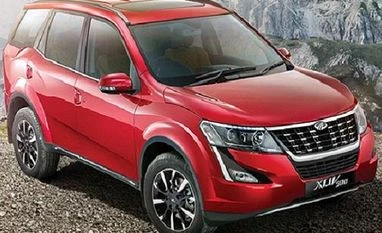
XUV 500
Photo: Twitter (@MahindraXUV500)
Tinesh Bhasin
Last Updated : Oct 24 2018 | 10:56 PM IST
Mahindra & Mahindra (M&M) recently launched a leasing programme for its retail buyers. At present, the car maker is offering the lease facility for two cars – KUV100NXT, starting at Rs 13,499 a month, and XUV500, starting at Rs 32,999 a month. Car leasing is not new to India, but had been previously only been offered by luxury car makers. It’s for the first time that a manufacturer is offering it on cars that rival B-segment hatchbacks and cost much below Rs 1 million.

The leasing facility at present is available in six cities and would soon be available in 19 more cities and also for other M&M models. The company has partnered with Orix and ALD Automotive to offer the service. The leased vehicle will be available for a period of up to 5 years, depending on the city and model selected. “Our leasing model is a category-creating product offering, a ‘no-worry’ experience for customers who prefer convenience over ownership. Going forward, I am confident that leasing will gain more currency and the penetration levels will move in line with global trends,” says V S Parthasarathy, group CFO & group CIO, Mahindra & Mahindra,

Leasing offers greater convenience than owning a car. Depending on the individual's requirement, a leasing company can customise a package that takes care of all the inconveniences that the customer is keen to avoid. Once the duration of the lease is over, the person returns the vehicle to the leasing company and can take a new one if he wants to. Leasing saves the individual from the hassle of valuing the car and then finding a buyer to purchase it at the desired price.

The convenience of leasing, however, comes at a cost. If you look at the money paid out of your pocket, owning a car – even after taking a loan – will work out to be cheaper. Also, leasing makes more sense for business owners, as the former can get a higher tax deduction if the vehicle is leased for business. Even as a business owner, before you decide for or against leasing, look at whether you are willing to bear the extra cost.

A lease gives you the right to use a vehicle for a pre-determined tenure and distance against the payment of a monthly fixed lease rental. There are two popular leasing models. If you want the leasing company to take care of maintenance, repair, and insurance, you need to sign an operation lease. In this case, the individual needs to pay just for the fuel, and in some cases, for consumables, such as changing the tyres when they wear out. The alternative is a financial lease, which is preferred by many corporates when they provide their employees with a vehicle. Here, the individual bears all the costs and when the lease expires, buys the car from the lessor.

Just as an individual pays equated monthly instalments (EMI) on a loan, he needs to pay a monthly rental in case of leasing. Some business owners prefer leasing as it doesn’t require a down payment, which frees up their cash flow. The lease rental is calculated based on a residual value-based funding, which is the cost of the car once it is used for a specific duration. Residual value is estimated based on various factors such as car model, the city of registration, tenure, kilometres, and so on. The key factors in determining the leasing price are the tenure of the lease and the annual usage. The higher the tenure and distance travelled in a year, the higher will be the lease rental, and vice versa. Before anyone buys, he should roughly estimate his usage.

When you take a car on lease for business, the entire money paid as rental can be claimed as a deduction. In case of a car bought on a loan, the business owner can claim depreciation and only the interest portion of auto loan as a deduction. Also, the money spent on maintenance, repair, insurance and fuel can be claimed as a deduction.

But don’t let taxation be the sole reason for taking a car on lease. Evaluate the difference between taking a car on lease and buying one outright, considering both cost and convenience.

One subscription. Two world-class reads.

Already subscribed? Log in

Subscribe to read the full story →
*Subscribe to Business Standard digital and get complimentary access to The New York Times

Smart Quarterly

₹900

3 Months

₹300/Month

SAVE 25%

Smart Essential

₹2,700

1 Year

₹225/Month

SAVE 46%
*Complimentary New York Times access for the 2nd year will be given after 12 months

Super Saver

₹3,900

2 Years

₹162/Month

Subscribe

Renews automatically, cancel anytime

Here’s what’s included in our digital subscription plans

Exclusive premium stories online

  • Over 30 premium stories daily, handpicked by our editors

Complimentary Access to The New York Times

  • News, Games, Cooking, Audio, Wirecutter & The Athletic

Business Standard Epaper

  • Digital replica of our daily newspaper — with options to read, save, and share

Curated Newsletters

  • Insights on markets, finance, politics, tech, and more delivered to your inbox

Market Analysis & Investment Insights

  • In-depth market analysis & insights with access to The Smart Investor

Archives

  • Repository of articles and publications dating back to 1997

Ad-free Reading

  • Uninterrupted reading experience with no advertisements

Seamless Access Across All Devices

  • Access Business Standard across devices — mobile, tablet, or PC, via web or app

Next Story



