Plan your prepayments, switch to tackle rise in home loan rates

New borrowers must avoid over-leveraging; prepare to cough up more as down payment
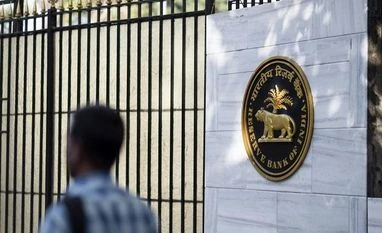
RBI
RBI ( Photo: Bloomberg)
Sanjay Kumar Singh
3 min read Last Updated : May 05 2022 | 6:03 AM IST
The Reserve Bank of India (RBI) hiked the repo rate from 4 to 4.4 per cent on Wednesday. Home loans from banks are linked to the repo rate. This hike will translate into higher equated monthly instalments (EMIs) on new home loans (compared to pre-hike levels).

For existing borrowers, the tenure will increase, which will translate into a higher interest burden.

But if the limit on tenure — usually retirement age for salaried employees and 65 years for the self-employed — gets breached, their EMI could also rise.

Rates headed up

Interest rates are headed upward.

“The RBI’s rate hike signals an imminent end to the all-time low interest rate regime, which has been one of the major drivers of home sales across the country since the pandemic began,” says Anuj Puri, chairman, Anarock Group.

Experts expect rates to continue hardening for some time, given the high and persistent nature of inflation.

Plan your prepayments

Existing borrowers must go in for planned prepayments.

“Use any windfall or savings to prepay,” says Adhil Shetty, chief executive officer (CEO), BankBazaar. According to him, borrowers should aim to prepay 5 per cent of the loan balance every 12 months.

“By prepaying at this optimal rate, you can reduce the loan tenure from 20 years to 12,” he adds.
Borrowers still on a loan linked to the marginal cost of funds-based lending rate (MCLR) should shift to a repo rate-linked loan after careful calculation.

“Unless the difference is more than 50 basis points (bps), you could stay put in certain circumstances," says Shetty.

EMIs on repo rate-linked loans are expected to be revised from next month.

An MCLR-linked loan may reset after several months (assuming your loan is linked to a 12-month MCLR). Hence, do a detailed analysis of costs before shifting.

Home loan balance transfer can also reduce your interest burden.

“The evaluation regarding whether to shift must be done every quarter. If you have more than 15 years of tenure left, switch if there is a difference of just 25 bps between your existing rate and the best rate you can get. If 10-15 years are left, the difference must be 50 bps. And if 5-10 years are left, it must be 65-70 bps,” says Aditya Mishra, director-home loan desk, 4B Networks.

Compare rates  

In a rising rate scenario, home finance companies (HFCs), whose loan rates are not linked to an external benchmark, could hike their rates by more than the quantum of the repo rate hike (40 bps). 

Gaurav Gupta, founder and CEO, MyLoanCare, believes new borrowers will be better off going for a repo rate-linked loan rather than one benchmarked to the prime lending rate (PLR). “Repo rate is an external benchmark, while PLR is an internal one. HFCs can exercise some discretion in how much they raise their loan rates,” says Gupta.

Banks, whose rates are linked to an external benchmark, could possibly hike the spread on their loans (for new borrowers).

“Comparing rates will become crucial in a rising rate scenario,” says Shetty.
Budget for higher rates in the future.

“Avoid over-leveraging in these circumstances. A rate that appears inexpensive today may not remain so in the future,” says Gupta.  

Higher interest rates will reduce the loan amount new borrowers are eligible for.

“Get ready to arrange a higher down payment,” says Shetty.

Finally, with prepayment becoming crucial, go with a lender that offers easier terms and conditions for prepayment.

One subscription. Two world-class reads.

Already subscribed? Log in

Subscribe to read the full story →
*Subscribe to Business Standard digital and get complimentary access to The New York Times

Smart Quarterly

₹900

3 Months

₹300/Month

SAVE 25%

Smart Essential

₹2,700

1 Year

₹225/Month

SAVE 46%
*Complimentary New York Times access for the 2nd year will be given after 12 months

Super Saver

₹3,900

2 Years

₹162/Month

Subscribe

Renews automatically, cancel anytime

Here’s what’s included in our digital subscription plans

Exclusive premium stories online

  • Over 30 premium stories daily, handpicked by our editors

Complimentary Access to The New York Times

  • News, Games, Cooking, Audio, Wirecutter & The Athletic

Business Standard Epaper

  • Digital replica of our daily newspaper — with options to read, save, and share

Curated Newsletters

  • Insights on markets, finance, politics, tech, and more delivered to your inbox

Market Analysis & Investment Insights

  • In-depth market analysis & insights with access to The Smart Investor

Archives

  • Repository of articles and publications dating back to 1997

Ad-free Reading

  • Uninterrupted reading experience with no advertisements

Seamless Access Across All Devices

  • Access Business Standard across devices — mobile, tablet, or PC, via web or app

Topics :Reserve Bank of IndiaEMIRBI monetary policyBankBazaar

Next Story



