DIG Roopa transfer: Commonest way of getting rid of inconvenient officers

D Roopa was transferred after she alleged that jail admin provided Sasikala with special facilities
graph
Aditi Phadnis
Last Updated : Jul 23 2017 | 10:51 PM IST
These are words that strike terror in the heart of a bureaucrat. “You have been transferred” can mean a range of misdemeanours — you don’t understand your job; you haven’t carried it out properly; you have spoken out of turn; you can’t get along with your colleagues….

D Roopa, Karnataka’s Deputy Inspector General (Prisons), was transferred out of the job within days of taking over on June 21, after she alleged irregularities at Bengaluru’s Parappana Agrahara Central Prison, where V K Sasikala, an associate of late Tamil Nadu chief minister Jayalalithaa, is lodged, convicted of corruption. In her report, Roopa alleged that for a consideration, the jail administration provided Sasikala special facilities, including an exclusive kitchen. Her report referred to "speculation" that Sasikala had paid Rs 2 crore for special treatment.

Director General (Prisons) H N Satyanarayana Rao, against whom Roopa cast as persions in her report, also gave a report to the government, alleging the source of the ill will between prison officials and Roopa stemmed from her dissatisfaction over division of work between senior officers in the department. Rao retires on July 31. A probe has been ordered. Roopa, meanwhile, has been moved to traffic administration. Former police officer Kiran Bedi, now Puducherry governor, has lauded Roopa’s conduct.

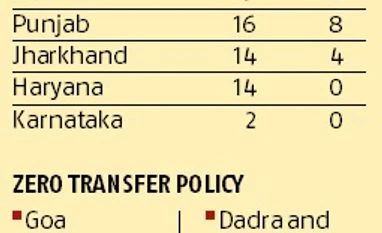
Transfers are the commonest way of getting rid of inconvenient officers. Figures show Karnataka has had a relatively unsullied record in this respect. Uttar Pradesh is the biggest culprit — though it could be argued that the state, being the largest, has the largest number of officers to manage.

Data: Bureau of Police Research and Development Analysis: Aditi Phadnis

One subscription. Two world-class reads.

Already subscribed? Log in

Subscribe to read the full story →
*Subscribe to Business Standard digital and get complimentary access to The New York Times

Smart Quarterly

₹900

3 Months

₹300/Month

SAVE 25%

Smart Essential

₹2,700

1 Year

₹225/Month

SAVE 46%
*Complimentary New York Times access for the 2nd year will be given after 12 months

Super Saver

₹3,900

2 Years

₹162/Month

Subscribe

Renews automatically, cancel anytime

Here’s what’s included in our digital subscription plans

Exclusive premium stories online

  • Over 30 premium stories daily, handpicked by our editors

Complimentary Access to The New York Times

  • News, Games, Cooking, Audio, Wirecutter & The Athletic

Business Standard Epaper

  • Digital replica of our daily newspaper — with options to read, save, and share

Curated Newsletters

  • Insights on markets, finance, politics, tech, and more delivered to your inbox

Market Analysis & Investment Insights

  • In-depth market analysis & insights with access to The Smart Investor

Archives

  • Repository of articles and publications dating back to 1997

Ad-free Reading

  • Uninterrupted reading experience with no advertisements

Seamless Access Across All Devices

  • Access Business Standard across devices — mobile, tablet, or PC, via web or app

Next Story



