The government is mulling a special session to amend the constitution to enable a national goods and services tax (GST). A look at the dynamics involved:
The two houses of Parliament have been adjourned sine die but not prorogued. What does this mean?
Prorogation means termination of a session of a House by an order of the President under article 85(2)(a) of the Constitution. Usually, prorogation follows a sine die adjournment of a sitting. In the present case, the monsoon session of Parliament has come to an end but the President is yet to be officially informed about it.
Since the monsoon session has not been prorogued, if the government were to formally extend it, what would this entail?
According to Constitutional expert Subhash Kashyap, the house has not been prorogued, only adjourned. So, the government could extend the present session and technically summon both Houses any time at a short notice, even as early as tomorrow.
Should the government decide for a special session, what does it entail?
According to former Lok Sabha secretary general T K Vishwanath, a special session is always dedicated to considering and passing a specific issue or bill. All other business like Question Hour, Zero Hour, etc, are dispensed with. To summon such as session, the government needs to first get both Houses prorogued.
Whether an extension of the monsoon session or a special session, how different would it be for passing a constitutional amendment like the GST bill?
It will make no difference to the procedure for a constitutional amendment. As explicitly stated under Article 368 of the Constitution, this can be introduced in either House, needs to be passed by a majority in each, with at least two-thirds of the members present and voting in favour.
Can the government get the constitutional amendment for a GST passed in a joint sitting of both Houses?
Constitutional expert Subhash Kashyap says it has been clearly stated that a joint sitting can be held for all legislations except a constitutional amendment. The latter needs to be passed in line with the detailed procedure in each House as explained earlier.

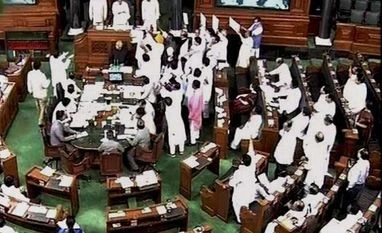 "Dynamics of calling a special session of Parliament")


 Connect with us on WhatsApp