Expel Rahul as MP, suspend him: BJP has 2 options as opposition fights back

Ruling party steps up attack against Congress leader for his remarks in England
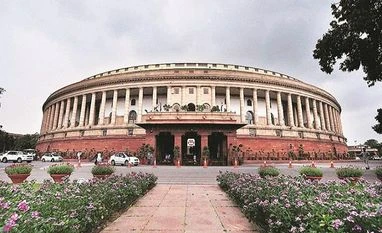
Parliament
Aditi Phadnis New Delhi
4 min read Last Updated : Mar 17 2023 | 6:36 PM IST
The two houses of Parliament were adjourned till Monday after transacting little business as ministers held consultations on how to get around the issue as the BJP and the opposition led by Congress leader Rahul Gandhi reviewed their strategies.

The BJP is seriously considering getting Gandhi suspended, even expelled from the Lok Sabha for his remarks in England. It can do that in two ways: via a recommendation through the privileges committee; or via a special committee that can be ordered by the Speaker (as was done in the 2015 cash-for-votes case) once the House gives its leave.

The committee can go through Gandhi’s utterances, rule that he did indeed hold the House and its members in contempt and recommend his expulsion, means the lawmaker from Wayanad will cease to be a Lok Sabha MP.

A special committee can also be ordered suo moto by the Speaker. However, there is a procedural problem here.

Nishikant Dubey, BJP MP from Bihar, has written a letter to the Speaker seeking to punish Gandhi for violating privileges of the House and holding it in contempt. He cited Rule 223, but it does not allow a special committee, only that the matter should be brought before a privileges committee. Gandhi already has one matter of violation of privilege against him. This will be the second, if the Speaker refers it to the committee and the committee so decides.

Four major privileges enjoyed by Members of Parliament are freedom of speech in Parliament, freedom from arrest, right to prohibit the publication of proceedings and right to exclude strangers (who are not members of the House).

The punishment for an MP found to have committed a breach of privilege can range between a warning and imprisonment, depending upon its severity. New privileges cannot be created—they are well defined and rely on precedents.

“Parliament is the highest legislative body. It must function without hindrance. The constitution gives them that freedom – they enjoy judicial immunity for their work. The idea is that they should not hesitate to speak for fear of courts or other bodies – they should be able to speak freely,” said former Lok Sabha Secretary General P D T Achary.

"But there are restrictions as well; if an MP says, for example, that Parliament is a den of thieves, he has brought Parliament into disrepute and he has no right to do that,” he said.

But everything has to be done by Parliament itself. In 1978, Indira Gandhi was expelled from Parliament by the Janata Party on the issue of privileges. She took recourse to the Supreme Court. Achary said the bottom line is the House has to decide that its privilege has been violated.

Reference to a special committee, which Dubey has demanded, is another matter altogether.

However, battle lines on the issue are becoming sharper by the day. “Anything related to the nation is a matter of concern for all. We do not care what’s happening to the Congress or its leadership. But if he (Gandhi) insults the nation, we cannot keep quiet,” said Union law minister Kiren Rijiju.

However, the Congress responded in kind. Rajya Sabha MP KC Venugopal sought “privilege proceedings” against Prime Minister Narendra Modi for making “derogatory, insulting, distasteful and defamatory” remarks against the Wayanad MP and former Congress president Sonia Gandhi on the floor of the House. Venugopal approached Rajya Sabha Chairperson Jagdeep Dhankhar with a notice of question of privilege against Modi under Rule 188 of the Procedure and Conduct of Business in the Upper House.

Over the weekend, both the government and the opposition will mount public pressure and the presiding officers will likely seek legal opinion to decide how to proceed. Monday will be a crucial day for the remainder of the budget session.

One subscription. Two world-class reads.

Already subscribed? Log in

Subscribe to read the full story →
*Subscribe to Business Standard digital and get complimentary access to The New York Times

Smart Quarterly

₹900

3 Months

₹300/Month

SAVE 25%

Smart Essential

₹2,700

1 Year

₹225/Month

SAVE 46%
*Complimentary New York Times access for the 2nd year will be given after 12 months

Super Saver

₹3,900

2 Years

₹162/Month

Subscribe

Renews automatically, cancel anytime

Here’s what’s included in our digital subscription plans

Exclusive premium stories online

  • Over 30 premium stories daily, handpicked by our editors

Complimentary Access to The New York Times

  • News, Games, Cooking, Audio, Wirecutter & The Athletic

Business Standard Epaper

  • Digital replica of our daily newspaper — with options to read, save, and share

Curated Newsletters

  • Insights on markets, finance, politics, tech, and more delivered to your inbox

Market Analysis & Investment Insights

  • In-depth market analysis & insights with access to The Smart Investor

Archives

  • Repository of articles and publications dating back to 1997

Ad-free Reading

  • Uninterrupted reading experience with no advertisements

Seamless Access Across All Devices

  • Access Business Standard across devices — mobile, tablet, or PC, via web or app

Topics :Rahul GandhiParliamentBJPCongress

Next Story



