24 proposed hydro-electric projects in Uttarakhand might not take off soon
Environment ministry tells SC it needs one more year to study their' impact on biodiversity
BS Reporter New Delhi The construction of as many as 24 proposed hydro-electric projects ‘slated to produce 2,900 Mw of electricity in Uttarakhand’ might not take off for at least another year.
The union ministry of environment and forests (MoEF) gave an affidavit in the Supreme Court on Tuesday, stating it would require at least 12 months to conduct more detailed studies on the proposed 24 hydro-electric projects, found to be impacting biodiversity in the state.
“In order to have a thorough, comprehensive study and critical examination of the HEPs (hydro-electric projects), this group may be allowed a time period of at least 12 months,” said the MoEF in the affidavit. It has proposed a new team which will have experts from institutes such as Tata Institute of Social Sciences and Wadia Institute of Himalayan Geology, beside various environmentalists, as members.
Following the devastating floods in Uttarakhand in June 2013, the Supreme Court had in August 2013 directed the Centre to conduct fresh reviews on these projects located on the Alakananda and Bhagirathi rivers. And ordered a blanket ban on granting any more environmental clearances to hydro projects in the hilly state till further orders.
The apex court had also asked MoEF to constitute an experts’ body to ascertain whether the hydroelectric projects in the state had a role in escalating the floods, which had affected half a million people. Of the 39 projects that were proposed to be set up in the state, 24 were “found to be significantly impacting biodiversity in the two sub-basins”.
According to the team of experts, the construction of various HEPs in the state had caused environmental degradation and escalated the impact of flooding. “MoEF needs to conduct a formal review of the environmental damages at all the HEPs in Uttarakhand and prepare guidelines for restoration. Till then, none of the projects should begin power production,” it noted.
If the plea by the Union government is accepted by the Supreme Court, there would be a reduction in power generation capacity of 27 per cent in the state as a total of 70 HEPs are being planned with a capacity of 9,563 Mw. According to the state government, at present, 45 HEPs are operational with installed capacity of 3,164 Mw. Hence, the state government will have to forego about 90 per cent of its present production capacity, if the projects are stalled.
The experts’ team also proposed to demarcate an ecologically-sensitive zone along all the rivers of Uttarakhand.
According to MoEF, the three months’ given to the team of experts to conduct studies in the state was not “adequate” and it requires more time to “carry out a cumulative impact assessment and carrying capacity study of these rivers to optimally work out and suggest as to how many HEPs, at which locations, their design and with what capacity, could be allowed in a sustainable manner”.
Along with conducting hydro-geological studies and social-cultural impact assessment of the projects, the new study would also identify ‘no go, areas in the state where the construction of HEPs would be barred.

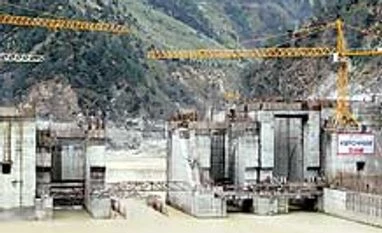 "24 proposed hydro-electric projects in Uttarakhand might not take off soon")


 Connect with us on WhatsApp