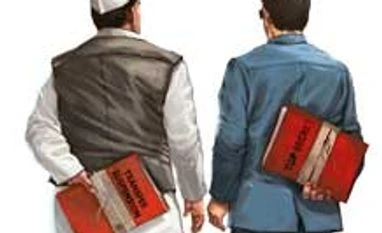
Even as political parties treaded cautiously on the Supreme Court judgment allowing negative voting in elections, Constitutional experts said while the judgment is good in intention, it is unlikely to make any substantive change in the election process.
According to experts, Friday’s SC judgment is significant in two aspects: First, it safeguards the identity of the voter who opts for ‘none of the above’ option. Until now, the identity of such a voter was revealed as he was required to give a form stating his decision to the returning officer. Second, if more than 50 per cent of the voters poll for none of the candidates listed, then the candidate with majority votes will still be declared the winner. However, his candidature will be morally questionable. To undo this, the government will have to amend the Representation of the People Act, 1951.
Subhash Kashyap, Constitutional expert and former secretary-general of the Lok Sabha, said the judgment was against the basic purpose of elections, as elections are meant to elect a candidate. “The judgment is well intentioned. But you cannot make the electoral process meaningless.”
C K Jain, also a former secretary-general of the Lok Sabha, said. “In principle, it is a good judgment. If right to reject will help parties field better candidates, then I welcome it. But the fact remains that voters in our country vote on many other issues than mere competence of the candidate,” said Jain.
Kashyap said it was “extremely doubtful” that voters will stand in a queue to vote for “none of the above”. Instead, Kashyap said, the voter is likely to abstain from the polling process.
Member of Parliament Gurudas Dasgupta of the Communist Party of India questioned Kashyap’s argument. “You don’t know for what reason a voter didn’t turn up to vote. That the voter is not impressed with any of the candidates, is just one of the many reasons. Now, at least, the voter will make his decision clear.”
Former Chief Election Commissioner T S Krishnamurthy welcomed the judgment and noted that it will force political parties to select better candidates. “The major fallout of this judgment is that political parties will field better candidates. But it is too early to say it will improve the polity of the country.”

 "Order may not reform political process: Experts")


 Connect with us on WhatsApp