Kejriwal to 'go to any extent' on Jan Lok Pal Bill
Without mentioning affirms resignation as an extent
Press Trust of India New Delhi Delhi Chief Minister Arvind Kejriwal on Saturday threatened to "go to any extent" over his pet anti-graft legislation, the Jan Lok Pal Bill, opposed both by the Congress, whose continued support is essential for the survival of his government, as well as the Bharatiya Janata Party (BJP).
"Corruption is an extremely important issue and I will go to any extent," he said during an interaction with PTI editors at the agency's head office here.
Asked if he could resign, the Aam Aadmi Party leader responded by affirming he could go to any extent over the "huge" issue of corruption.
"That (resignation) you interpret," he added.
Asserting both the Congress and BJP would never allow the passage of the Bill, he said since the government had decided to probe the alleged corruption in the Commonwealth Games (CWG) projects, Congress' "pitch" had become more "shrill" in this regard and also there were allegations against the BJP, in power in the Municipal Corporation of Delhi (MCD) for seven years.
Last week, the Delhi Cabinet cleared the draft of the Bill that provides for covering all public servants, from chief minister to Group-D employees, and seeks life term as maximum punishment for those found guilty of corruption.
Bringing the Bill to contain corruption was a key election promise to the voters by the party.
"They (Congress) realise if there is a strong Lokpal, many of these people will get into trouble. For seven years, the BJP is in power in MCD and they may also get into trouble. If the Bill is passed, all these CWG cases will go to Lokpal," the 45-year-old minister said.
Kejriwal also said, "We have written to the home minister to withdraw the (2002) order that directs the Delhi government to take approval of the ministry before passage of any Bill in the Assembly" and asserted the city government could not follow these "unconstitutional rules."
"That was only an order and is completely against the Constitution. How can an order by the home ministry curtail law-making powers of Delhi Assembly. It is a very very serious issue. I have taken an oath of the Constitution and not home ministry's order. I will uphold the Constitution." He added "when I saw the order after becoming chief minister, I was completely flabbergasted. How can they do that? Then I told my officials to show me the history. I have a list of 13 legislations in which they did not take any approval. The legislations are held back in the home ministry for six-seven years. If this is the case, how can the Assembly make law? Sheila Dikshit used to pass law before taking Centre's approval."
Kejriwal had on Friday asked Lt Governor Najeeb Jung not to protect the interest of Congress and the home ministry, keen on stalling his government's Jan Lok Pal Bill.
"We have written to Home Minister to withdraw the (2002) order which directs Delhi government to take approval of the ministry before passage of any bill in the Assembly," he said. Questioning the validity of the MHA order, Kejriwal said government will not send the bill to the Home Ministry for approval. The Constitution says Delhi government has "power to make law except in three subjects. But they cannot make any law which is repugnant to any central law. If they are, and if President grants assent after the passage of the law, then that also can be done."
"That means we do not have to take approval before introduction of a bill. That is the power given by the Constitution to Delhi. Constitution is supreme. Law-making powers of an assembly have to defined by the Constitution and not by anybody else," he said. Referring to provisions in the Government of National Territory of Delhi Act, he said it stated that if there is a law which is a money bill or which is repugnant to any central law, then LG's recommendation would be taken before introducing it.
"But Section 26 of that law says, even if the recommendation is not taken before, it can be taken later. There is no problem in that. But, Home Ministry has passed an order saying, if Delhi Government brings any law, then it has to get approval of the Central government," he said.
The Solicitor General, whose opinion was sought by Jung on the constitutionality of Delhi Government's proposal to enact the Bill without seeking Centre's clearance, had conveyed to him that it will be illegal if enacted without the consent.

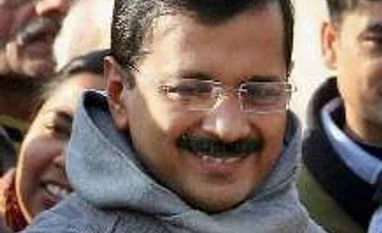 "Kejriwal to 'go to any extent' on Jan Lok Pal Bill")


 Connect with us on WhatsApp