Only 1 in 4 rape accused convicted in 2016: National crime data

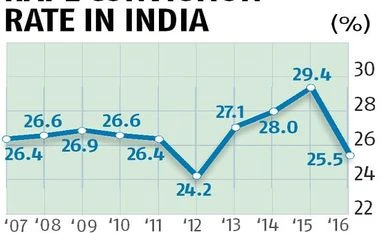
About 278,886 cases of rape have been reported in India over the past 10 yrs under IPC Section 376
Infographics
Aditi Phadnis
Last Updated : Sep 03 2017 | 10:09 PM IST
In 2016, one in four rape cases in India ended in a conviction, the lowest since 2012, according to national crime data. India’s conviction rate for rape, at 25.5 per cent, remains low compared to all cognisable crimes — those that do not require a magistrate’s permission to investigate — under the Indian Penal Code (46.9 per cent in 2015).

As a special Central Bureau of Investigation (CBI) court in Panchkula, Haryana, sentenced Dera Sacha Sauda chief Gurmeet Ram Rahim Singh to 20 years imprisonment, 15 years after the case was registered, we take a look at the country’s record in disposing cases of rape. Nagaland and Mizoram had the best conviction rates at 72.7 per cent and 70.6 per cent, respectively, in 2015, the year for which the latest data were available. 

On the other hand, Jammu and Kashmir and Gujarat reported the worst figures at seven per cent and 10.1 per cent, respectively.

As many as 278,886 cases of rape have been reported in India over the past 10 years under Section 376 of the IPC. The conviction rate in Haryana stood at 24.7 per cent, the lowest in a decade after 2011 (23.4 per cent).

“The declining conviction rate in rape cases means lesser number of registered cases could be proved in court and this gives rise to the suspicion that maybe false case, are being registered,” said Anant Kumar Asthana, a Delhi-based activist and lawyer.

“But it could also mean that police is not conducting a proper investigation or that victims are not getting quality legal representation during trials.

Whatever may be the reason, declining conviction causes concern and must be examined for possible reasons,” Asthana added.
 
“Stringent implementation of laws and strict policing will help, but real change will come only when abusers and rapists are consistently convicted, survivors are not doubted, judged or shamed,” said Preethi Pinto, program coordinator on prevention of violence against women and children at Mumbai-based SNEHA (Society for Nutrition, Education and Health Action).
Source: National Crime Records Bureau and IndiaSpend

One subscription. Two world-class reads.

Already subscribed? Log in

Subscribe to read the full story →
*Subscribe to Business Standard digital and get complimentary access to The New York Times

Smart Quarterly

₹900

3 Months

₹300/Month

SAVE 25%

Smart Essential

₹2,700

1 Year

₹225/Month

SAVE 46%
*Complimentary New York Times access for the 2nd year will be given after 12 months

Super Saver

₹3,900

2 Years

₹162/Month

Subscribe

Renews automatically, cancel anytime

Here’s what’s included in our digital subscription plans

Exclusive premium stories online

  • Over 30 premium stories daily, handpicked by our editors

Complimentary Access to The New York Times

  • News, Games, Cooking, Audio, Wirecutter & The Athletic

Business Standard Epaper

  • Digital replica of our daily newspaper — with options to read, save, and share

Curated Newsletters

  • Insights on markets, finance, politics, tech, and more delivered to your inbox

Market Analysis & Investment Insights

  • In-depth market analysis & insights with access to The Smart Investor

Archives

  • Repository of articles and publications dating back to 1997

Ad-free Reading

  • Uninterrupted reading experience with no advertisements

Seamless Access Across All Devices

  • Access Business Standard across devices — mobile, tablet, or PC, via web or app

Next Story



