PM in US: Some ups, many downs
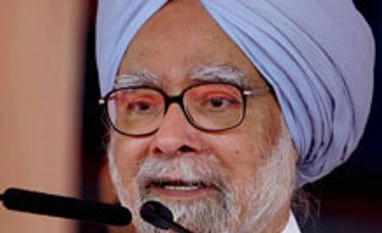
Mihir S Sharma On board Air India One Manmohan Singh, over the near-decade he has been prime minister, has perfected the art of putting a brave face under difficult circumstances. But on Tuesday, even his well-practised mask slipped a bit when discussing Rahul Gandhi’s poorly-timed attack on a government ordinance about convicted MPs.
While Singh denied it had affected his bilateral meetings in the US — in particular with President Barack Obama and Pakistan Prime Minister Nawaz Sharif — he nevertheless did significantly say he intended to find out why the expression of Rahul’s dissent “had to be done that way”.
As he disowned any ability to control what Rahul may choose to say, the PM broke into a little smile — described variously by observers aboard Air India One as “exasperated” and “tired”. However, it seems he felt confident enough, following three phone conversations on the subject with Congress president Sonia Gandhi, to be determined to enquire as to Rahul’s poor timing,
He twice implied that he had grown accustomed to problems such as the one Rahul had created. Yet it is clear that on this trip to the US, Singh was not allowed to freely set his agenda. When it wasn’t news about Rahul’s attack on the government coming in scant hours before the PM’s meeting with President Obama, it was the terror attack on Jammu and the subsequent drumbeat from the electronic media and off-the-record sources in his own party that he should call off a meeting with Sharif that he had firmly set his mind on.
Although he went ahead with the Sharif meeting, the agenda was not trade or visa reform or a timetable for dialogue; Singh, instead, in a departure from his long-held preferences, told the Pakistanis that tranquillity would have to return to the Line of Control before any progress was made elsewhere. This followed a speech in the United Nations General Assembly that was unusually combative for an Indian PM there. He directly responded to Sharif’s speech in that forum the previous day, and spoke of “state-sponsored” cross-border terrorism. He also focused on Pakistan when talking to Obama.
According to those in the room during the bilateral meeting with the Pakistani delegation, while most of the Pakistanis present spoke, Singh did all the talking on the Indian side. It seems that the PM was so firm and focused on the terror issue that the Pakistanis did not once raise the issue of the revival of the composite dialogue, which was their usual concern. Sharif’s behaviour was also anomalous, according to these officials: He referred frequently to notes, unusual for a normally relaxed and expansive conversationalist, and seemed rattled. The body language was also awkward. The PM, essentially, had put the normalisation process on the back-burner, a step backward. This is not how Singh would have liked this summit to play out when he left.
Later, speaking to reporters on Air India One, the PM appeared relaxed but resigned. He said frankly, when asked about the UPA’s appeal to voters, that his government had “done something wrong, but we have done many good things” — and hoped that voters would be “generous and tolerant” about his record when casting their votes. Nor did he specify any further big ideas for the remainder of his term, setting a noticeably umambitious set of targets – to work on growth and to keep the borders secure. He also, perhaps for the first time, directly referred to how little time he may have left as PM.
The feeling on board Air India One on its long hops back to New Delhi was that this long trip has been a microcosm of the UPA’s whole term. It began well, with the stars aligned and with a big-idea agenda — restoring Indo-US bonhomie, and deepening the rapprochement with Pakistan. But the same three things scuttled the trip that did in the UPA’s term: By media-driven controversies; by the machinations of Pakistan’s deep state, and a jingoistic response from vocal sections in India; and, perhaps most importantly, a Congress party so unwilling to compromise on political manoeuvring that it failed to support its government’s agenda.
Somehow, the visible mood of the PM and his delegation remained upbeat at the end. But it is impossible to not wonder what lies behind the smile.

 "PM in US: Some ups, many downs")


 Connect with us on WhatsApp