Villagers to fight govt decision to lift ban on projects
Environment ministry on July 25 lifted the moratorium on large-scale projects in Maharashtra's coastal Ratnagiri and Sindhudurg districts
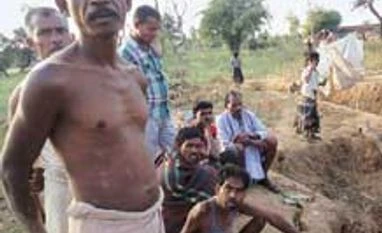
Sanjay Jog Mumbai Villagers and non-government organisations plan to approach the National Green Tribunal against the Union Ministry of environment and forests’ (MoEF) recent decision to lift the moratorium on large-scale projects in Maharashtra’s coastal Ratnagiri and Sindhudurg districts.
MoEF’s notification of July 25would apply to 986 villages from these two districts. Further, this would pave the way for development of mega projects, including new coal-based power generation, and expansion of existing ones. Besides, it will facilitate mining of minor minerals.
“The Centre’s move will be challenged in the National Green Tribunal’s Pune Bench. Modalities are being worked out. The relaxation in the moratorium will have an adverse impact on the Western Ghats’ ecology and environment. The government should have given priority for its conservation, especially in the wake of recent land slides across India,” Vivek Bhide, president, Ratnagiri Zilla Jagruk Manch, told Business Standard. He said the coal-based power projects at Dhopawe and Ranpar, discussed for long, might take off. An existing imported coal-based power project by an independent power producer in Ratnagiri district might get a nod for expansion.
Bhide said these two districts were famous for mango cultivation. He suggested the government could develop a ‘tourism corridor’ covering Raigad, Ratnagiri and Sindhudurg districts, as well as Goa.
MoEF had first imposed the moratorium in these districts on August 16, 2010, and its subsequent amendments issued on March 28, 2013, extended it to April 30, 2013. The Centre had lifted the freeze in October 2013 but re-imposed it a month later because a decision had not been taken on the Madhav Gadgil-led Western Ghats Ecology Expert Panel report. Following the re-imposition, the Maharashtra government had opposed the embargo, stating it should be restricted to the villages demarcated as ecologically sensitive areas by the K Kasturirangan-led High Level Working Group.
The 986 villages are part of 1,012 villages suggested by the Kasturirangan committee in its report to be included in the eco-sensitive zone. According to the Kasturirangan report, the eco-sensitive zone covers 17,340 sq km in Maharashtra, of 2,200 villages in 56 talukas across 12 districts. The Kasturirangan panel was formed to suggest new recommendations on the Western Ghats after the Madhav Gadgil committee’s report recommended an indefinite moratorium on new environmental clearances for mining in ecologically sensitive zones. Sindhudurg’s proposed mining leases fall in this category.
The ruling Congress and Nationalist Congress Party (NCP) parties had both made a strong case for relaxation, saying the moratorium and strict norms suggested by the Gadgil and Kasturirangan committees would halt development in these districts. Similarly, the Shiv Sena had campaigned for a relaxation of moratorium, saying a restart of mining for minor minerals would benefit the villagers.
The Congress-NCP combine and Shiv Sena are expected to make lifting of the moratorium in these villages as one of their planks in the run-up to the Assembly elections in October.

 "Villagers to fight govt decision to lift ban on projects")

