The emergency imposed by Indira Gandhi was a test of character. Thousands were put in jail. The suppression of freedom and constitutional rights was total. The press was under strict censorship. It was dangerous to venture an opinion that authority could interpret as seditious. In this atmosphere, anyone who stood up to Indira Gandhi and her colleagues as they assaulted the Indian constitution has to be a good guy.
Among all the politicians, activists and silent unknown supporters of democracy, one was unusual: Swami Vishwesha Teertha, head of the Pejawar Math in Udupi, tasked with upkeep of the famous Krishna temple there. The Swamiji, now in his 80s, is a follower of Madhvacharya, founder of the Dvaita school of philosophy, one of many branches of the Vedanta philosophy. In 1975, he wrote a letter to the PM, registering his moral resistance to tyranny, daring her to put him behind bars.
In this, Vishwesha Teerth was following his guruji, active in the freedom movement. Few know he has kept a lifelong commitment to khadi and the idea it represents. Therefore, when he invited a group of Muslims to break their roza and offer namaz at the Udupi Math last week, the Sri Rama Sene, a fundamentalist outfit, and even the Rashtriya Swayamsevak Sangh was outraged. The Math is devoted to protecting the cow. How could they invite, into the precincts of the temple, people who slaughter the cow? Vishwesha Teertha was composed and austere in his response. He said: “This programme gives a clear picture that the Hindu community wants to live together in peace. Namaz was not done in the temple; it was done in the dining hall. It’s their custom to have snacks after namaz and the hall was given for it. They are not the only people who eat beef; many Hindus eat it, too.”
Sri Rama Sene is undeterred and has threatened to launch a bandh on Sunday. The response to this will be illuminating as to its real strength. But, more on Vishwesha Teertha — he was also one of the founder members of the Vishva Hindu Parishad. Quite what his role was during the destruction of the Babri Masjid is not clear. However, he later justified it and said a Ram temple should be built on the site.
He has said time and again that he abhors the way Dalits are treated by higher caste Hindus. True, he has not rejected the varnashrama dharma but believes Dalits would never have abandoned Hinduism for other religions if Hindu society had treated them better.
He has vast philanthropic interests, from establishing gurukul education institutions to improving the religious infrastructure in temples for practising Hindus. Beginning with a constant campaign that temples should, above all, be clean, welcoming and sattvik. His devotees say he is a regular reader of a range of newspapers and journals; he loves English as a language. He also reads fiction in Kannada, chiefly when a book becomes controversial. It goes without saying that he has mastery over Hindu philosophical and religious texts and, according to his admirers, goes to the heart of complex philosophical problems in an instant.
If Sri Rama Sene is taking on such a man, who is bested in that battle will be interesting to watch.
Read this article for free
Register to continue reading premium journalism and analysis from Business Standard.

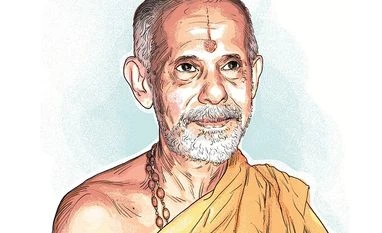 "Vishwesha Teertha: Principle above pragmatism, then and now, too")











