What does Ajit Singh's reported dalliance with the SP mean for the RLD?
It is unlikely that whether with SP or BJP, the RLD's fortunes are going to revive dramatically; at best, it is the end of a certain kind of politics.
Aditi Phadnis New Delhi Ajit Singh of the Rashtriya Lok Dal (RLD) has rejected the Bharatiya Janata Party’s offer to merge his party into it and fight the Uttar Pradesh elections as a BJP leader on the lotus symbol.
He is now conducting negotiations with Mulayam Singh Yadav of the Samajwadi Party and will likely opt to contest the elections on his own symbol – and you can be forgiven for being unable to recall what it is (the tubewell, FYI).
From Chaudhary Charan Singh to Jayant Chaudhary, running parties, dividing and subdividing them, and then defiantly deciding to fly an independent flag – that’s the Chaudhary Charan Singh clan for you.
If you consider the history and development of the Lok Dal (which is what the RLD originally was) the story is nothing short of remarkable.
As historian Sunil Khilnani writes about Chaudhary Charan Singh: “He melded a generations-old knowledge of rural life with an analytical study of land reforms and agricultural subsidies around the world to do something in North India that doesn’t happen much in the country: he redistributed power and altered the social structure – without violence.”
Those who have heard Charan Singh speaking at public meetings and even in the Lok Sabha say the experience was unforgettable, simply because it was so unremarkable. Charan Singh did not – like others of the Morarji Desai generation – believe in flowery oratory, alliteration, etc (does that remind you of someone?) He did not believe in seducing listeners. He just spoke logically, to the point and in a straightforward fashion with no flourishes whatsoever. If you didn’t want to hear him speak , you were free to leave the meeting – as he sometimes exhorted people to do when they got restive.
Ajit Singh
1978 saw the biggest congregation of kisans come to Delhi after the Janata Party experiment collapsed. Charan Singh made a bid to become Prime Minister of India (for just 24 days), heralding the return of Indira Gandhi in 1980. He was reviled as a back-stabber and turncoat, but also seen as the man who first dinned into people’s heads that there was a Bharat and there was an India.
Inevitably, his son Ajit Singh took on the mantle of becoming India’s kisan leader. Ajit Singh presided over a rapidly diminishing empire – Chaudhari Devi Lal, Omprakash Chautala and others poached into the kisan legacy. And now Ajit Singh’s son Jayant who is the heir apparent, is likely to be more at ease in the saddle of a motorbike than a horse. In the 2012 Assembly elections in Uttar Pradesh, the RLD reduced its tally from 10 to nine, and saw its vote share fall to 2.33% from 3.7% in 2007 polls and 2.49% in 2002. Little wonder, then, that no one is taking the party seriously.
In Western UP, however, Charan Singh – who by the way was no secularist in the modern sense of the word, but was respected by Hindu and Muslim farmers alike – is recalled with a degree of nostalgia. In the complex power relations between a declining feudal aristocracy and a rising land owner-tiller, the Jat is viscerally anti-authority. So if the RLD has opted to turn its back on the BJP, it is out of respect for its constituency. It is unlikely that whether with SP or BJP, the RLD’s fortunes are going to revive dramatically; at best, it is the end of a certain kind of politics.

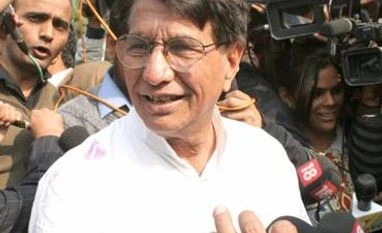 "What does Ajit Singh's reported dalliance with the SP mean for the RLD?")


 Connect with us on WhatsApp