The hole in Earth's ozone layer that forms over Antarctica each September was the smallest observed since 1988, NASA satellite measurements from this year have revealed.
The ozone hole reached its peak extent on September 11, covering an area about two and a half times the size of the US - 7.6 million square miles in extent - and then declined through the remainder of September and into October, according to scientists from NASA.
Ground- and balloon-based measurements from the National Oceanic and Atmospheric Administration (NOAA) also showed the least amount of ozone depletion above the continent during the peak of the ozone depletion cycle since 1988.
NOAA and NASA collaborate to monitor the growth and recovery of the ozone hole every year.
"The Antarctic ozone hole was exceptionally weak this year," said Paul A Newman from NASA.
"This is what we would expect to see given the weather conditions in the Antarctic stratosphere," said Newman.
The smaller ozone hole this year was strongly influenced by an unstable and warmer Antarctic vortex - the stratospheric low pressure system that rotates clockwise in the atmosphere above Antarctica.
This helped minimise polar stratospheric cloud formation in the lower stratosphere.
The formation and persistence of these clouds are important first steps leading to the chlorine- and bromine- catalysed reactions that destroy ozone, the scientists said.
These Antarctic conditions resemble those found in the Arctic, where ozone depletion is much less severe.
Last year, the ozone hole reached a maximum 8.9 million square miles, 2 million square miles less than in 2015.
The average area of these daily ozone hole maximums observed since 1991 has been roughly 10 million square miles.
The scientists said the smaller ozone hole extent in 2016 and 2017 is due to natural variability and not a signal of rapid healing.
NASA and NOAA monitor the ozone hole via three complementary instrumental methods.
"In the past, we have always seen ozone at some stratospheric altitudes go to zero by the end of September," said Bryan Johnson, NOAA atmospheric chemist.
"This year our balloon measurements showed the ozone loss rate stalled by the middle of September and ozone levels never reached zero," said Johnson.

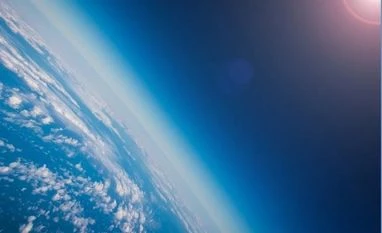 "New Ozone hole found over Antarctica smallest in 30 years: NASA")


 Connect with us on WhatsApp