Rs 1.14 lakh crore of bad loans have been written off by 27 public sector banks (PSBs) during FY 2012-15, with the last fiscal alone witnessing a steep 53 per cent rise in write-offs as part of the balance sheet clean-up.
For the fiscal ended March 2015, public sector banks have written off loans amounting to Rs 52,542 crore, an increase of 52.6 per cent over the previous fiscal, as per the RBI data.
About one-fifth of bad loans was written off in 2014-15 as the gross non-performing assets (NPAs) at the end of March 2015 rose to Rs 2,67,065 crore.
These 27 banks had written off Rs 34,409 crore in 2013-14 while Rs 27,231 crore in 2012-13. So in aggregate, a staggering Rs 1.14 lakh crore were written off in the last three fiscals.
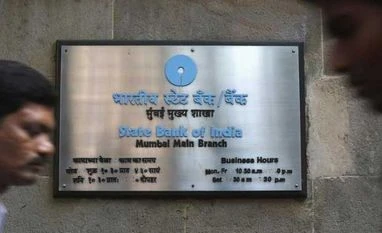
For 2014-15, SBI topped the chart of PSBs by writing off Rs 21,313 crore followed by Punjab National Bank Rs 6,587 crore and Indian Overseas Bank Rs 3,131 crore.
Besides, Allahabad Bank's write-off figure stood at Rs 2,109 crore, Central Bank of India Rs 1,995 crore, IDBI Bank Rs 1609 crore, Bank of Baroda Rs 1,564 crore, Syndicate Bank Rs 1,527 crore, Canara Bank Rs 1,472 crore and Uco Bank Rs 1,401 crore.
PSU banks have been witnessing a continuous surge in bad loans. As on September 2015, the gross NPAs of PSBs have increased to Rs 3,00,743 crore as against Rs 2.67 lakh crore in March 2015.
Concerned over mounting bad loans, RBI in consultation with the government is working on methodologies to clean up balance sheet of state-owned banks by March 2017.
RBI Governor Raghuram Rajan recently announced a March 2017 deadline for banks to clean up their balance sheets which are plagued by high incidence of bad assets.
While Rajan had assured that enough capital is available for public sector banks, he cautioned that some of the banks may witness erosion of profitability in the short run due to cleaning of books.
"We believe enough capital is available. While the profitability of some banks may be impaired in the short run, the system, once cleaned, will be able to support economic growth in a sustainable and profitable way," he had said.
The Finance Minister has indicated he will support the public sector banks with capital infusions as needed.
The government last year announced a revamp plan, 'Indradhanush', to infuse Rs 70,000 crore in state-owned banks over four years, while they will have to raise a further Rs 1.1 lakh crore from the markets to meet their capital requirements in line with global risk norms Basel III.
As per the capital infusion road map, PSU banks will get Rs 25,000 crore this fiscal and as well as the next fiscal and Rs 10,000 crore each in 2017-18 and 2018-19.
Out of Rs 25,000 crore set for the current fiscal, the government has infused about Rs 20,088 crore in 13 public sector banks.

 "27 PSBs write off 1.14 lakh-cr bad loans in 2012-15")


 Connect with us on WhatsApp