Budget 2016: Solar industry seeks tax sops, financial support
Government has ambitious plans for deployment of 175 GW renewable power capacities by 2022
Press Trust of India New Delhi Solar power industry wants the government to give tax incentives and financial support to make 'solar' an attractive and viable option, ahead of the Union Budget.
The government has ambitious plans for deployment of 175 GW renewable power capacities by 2022, including 100 GW of solar.
"The solar rooftop industry will certainly need better non-recourse financing options by increasing power sector exposure limits of domestic banks," one of the players in the solar industry said.
Amplus Solar MD & CEO Sanjeev Aggarwal said extension of tax holidays, waiver of electricity duty and banking charge for solar rooftops, activating REC benefits for rooftop projects and captive projects will certainly motivate more rooftop installations to come up in cities and towns.
"The industry corridors are echoing with the chatter around various sops proposed by the government to improve the power situation in the country," he said.
"The need of the hour is to create an effective ecosystem to enhance solar power generation capacity across India. Enforcement of net metering guidelines across states and renewable purchase obligations, strengthening of grid infrastructure to accommodate intermittent solar power, and promoting storage solutions by way of incentives, subsidies etc. Form the foremost asks of the solar power industry," he added.
While bankability of the discoms still remains a concern, going ahead it will be necessary for the state and centre to conduct targeted studies to assess strengthening of grid infrastructure to accommodate intermittent solar power and banking of power, Aggarwal added.
The solar rooftop industry will certainly need better non-recourse financing options by increasing power sector exposure limits of domestic banks, another player in the solar industry said.
KPMG's Santosh Kamath said in the forthcoming budget there should be an outlay for incentivising storage technologies which would be useful for both solar as well as the Electric Vehicle industry.
Asserting that there should be allocations to make coal plants flexible, he said this may be provided to states with high levels of solar and wind resources as a support mechanism to encourage adoption.
He said the government should continue with allocations for the solar water pump programme to make it sustainable.

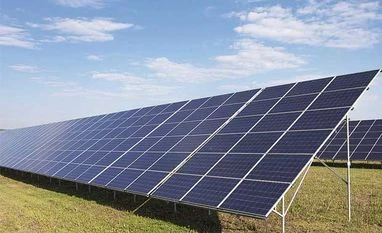 "Budget 2016: Solar industry seeks tax sops, financial support")


 Connect with us on WhatsApp