Centre mulls law for greater flexibility to retailers, malls
New bill, which will cut across sates when passed, is more women-friendly, makes it easier to get shop licences
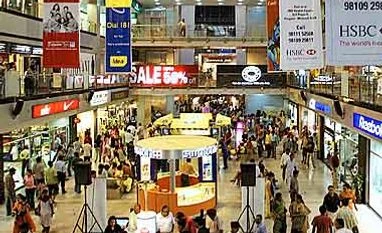
Press Trust of India New Delhi The Labour Ministry will hold first tripartite discussions tomorrow on a model law which seeks to provide greater flexibility to retailers as well as malls on various issues including the timings of opening and closing of shops throughout the year.
"Labour Ministry has called a tripartite meeting which is scheduled on January 5, to discuss the Model Shops and Establishments (Regulation of Employment and Conditions of Service) Bill, 2015," a ministry official said.
According to the draft bill, the Model Act would bring uniformity in the legislative provisions, making it easier for all the states to adopt it and thereby ensuring uniform working conditions across the country.
At present, states have their own legislation which regulates shops and establishments like their closing and opening times, holidays and working shifts of women.
The bill says that women should be permitted during night shift and there should be no discrimination against women in the matter of recruitment, training, transfer or promotions.
It will be applicable to shops and establishments having 10 or more workers except manufacturing units.
"Why should there be central legislation when states have their own legislation. Secondly, its is conceived with the presumption that one size fits all," All India Trade Union Congress (AITUC) Secretary D L Sachdev said.
"States have laws to regulate shops and establishments as per to their requirement and conditions. Allowing women to work in night shifts may be compromise with their safety and security in some states," he added.
However, as per the background note of the model law, the state laws are inadequate to deal with the issues related to shops and establishment.
Central government has found that there is rigidity in opening and closing of shop. There are other issues like discouragement to women in employment, difficulties in registration & annual renewal (of shop permits or licenses), problems in maintenance of statutory records and arbitrariness in statutory inspections.
The draft bill also provides for online one common registration (of retailers) through a simplified procedure and power of the government to make rules regarding the safety and health of workers.
It also provides for facilities like lavatory, creche, first aid and canteen by group of establishments, in case, it is not possible due to constraint in space or otherwise by individual establishment.
The draft law also made a provision for 12 days casual-cum-sick leave for workers, one day earned leave for every 20 days of work performed (can be accommodated upto 45 days), five paid holidays for festivals in addition to three national holidays, compensatory leave in lieu of overtime wage.
It also provides for exemption of highly-skilled workers (for example workers employed in the IT industry, biotechnology and R&D division) from daily working hours of 9 hours and weekly working hour of 48 hours subject to maximum 125 over-time hours in a quarter.

 "Centre mulls law for greater flexibility to retailers, malls")


 Connect with us on WhatsApp