China largest market for Panama Papers law firm Mossack Fonseca: ICIJ
More than 16,300 active shell companies were incorporated through the Hong Kong and China offices
AFPPTI Beijing Nearly a third of the business of the law firm at the centre of the Panama Papers scandal came from its offices in Hong Kong and China, reports said today, with the Asian giant assailed by corruption and capital flight.
More than 16,300 of Panamanian law firm Mossack Fonseca's active shell companies were incorporated through its Hong Kong and China offices, 29% of the worldwide total, according to the International Consortium of Investigative Journalists (ICIJ), which co-ordinated a year-long investigation into a trove of 11.5 million documents.
The investigation found that relatives of at least eight current or former members of China's Politburo Standing Committee, the ruling party's most powerful body, have been implicated in the use of offshore companies.
Such vehicles are not illegal in themselves and can be used for legitimate business needs. But they commonly feature in corruption cases, when they can be used to secretly move ill-gotten gains abroad.
Graft is rife in China, which Transparency International rates in 83rd place out of 168 in its most recent Corruption Perceptions Index.
At the same time growth in the world's second-largest economy is slowing, and its wealthy have increasingly sought to move funds abroad, but have to contend with Beijing's strict exchange-control regime.
Under President Xi Jinping, Beijing has launched a much- publicised anti-graft drive, but has not instituted systemic reforms such as public declarations of assets.
Xi's brother-in-law and family members of two current members of the Politburo Standing Committee (PSC), Zhang Gaoli and Liu Yunshan, have offshore holdings, the ICIJ reported.
Deng Jiagui, the husband of Xi's sister, was previously a shareholder in three companies: Supreme Victory Enterprises, Wealth Ming International and Best Effect Enterprises, reports said. The companies were closed before Xi took power in 2012.
Relatives of past PSC members Jia Qinglin, once the fourth-ranked leader in China, Li Peng, who led the Tiananmen Square crackdown, Hu Yaobang, ex vice-president Zeng Qinghong, and Tian Jiyun were named by The Guardian, which took part in the investigation.
The documents also named movie star Jackie Chan, billionaire heiress Kelly Zong Fuli, and shopping-mall magnate Shen Guojun.
Media in the Communist-ruled country have avoided reporting on the leaks' Chinese revelations, and social media has been scrubbed of references to them, with foreign news broadcasters such as the BBC blacked out when they report on the Panama Papers.

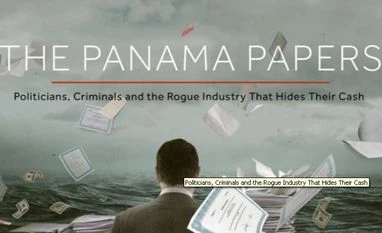 "China largest market for Panama Papers law firm Mossack Fonseca: ICIJ")

