
Covid effect: Schools closure impacted 247 mn Indian children, says UNICEF
Globally, schools for more than 168 million children have been completely closed for almost a full year, it said
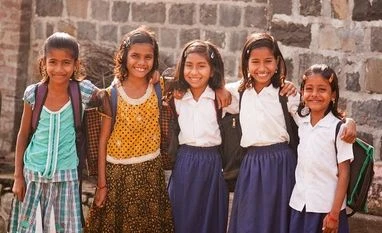 "Covid effect: Schools closure impacted 247 mn Indian children, says UNICEF")
Explore Business Standard
Globally, schools for more than 168 million children have been completely closed for almost a full year, it said
Closure of 1.5 million schools due to coronavirus pandemic and the resultant lockdowns in 2020 impacted 247 million children enrolled in elementary and secondary schools in India, a UNICEF report has found.
Globally, schools for more than 168 million children have been completely closed for almost a full year, it said.
The report stated that online education is not an option for all as only one in four children has access to digital devices and internet connectivity. Pre-COVID, only a quarter of households (24 per cent) in India had access to the internet and there is a large rural-urban and gender divide.
"In India, closure of 1.5 million schools due to the pandemic and lockdowns in 2020 has impacted 247 million children enrolled in elementary and secondary schools. In addition, there are over six million girls and boys who were already out of school even before the COVID-19 crisis began," a statement from the UN agency said Wednesday.
It also said that till date in India only eight states/UTs have opened all classes from class 1 to class 12; 11 states have reopened classes 6-12 and 15 states have only opened classes 9-12. Three states have reopened anganwadi centers, with younger children losing out greatly on crucial foundational learning.
"It has been nearly a year since the pandemic caused schools to close and disrupt the normal routine of children throughout India. We know that the longer children stay out of school, the more vulnerable they become, with less chances of returning to school.
"Any decision to reopen schools is made with the best interests of children in mind and as schools re-open in a staggered manner with children returning to their classrooms, we must strive to support them in catching up on the learning they have missed," said Dr Yasmin Ali Haque, UNICEF India Representative.
This is especially true for those who were not able to access digital or remote learning opportunities, Haque said, adding that the mental health and well-being of children is a crucial concern, while psycho-social support from teachers, parents and caregivers is a priority.
UNICEF, UNESCO, UNHCR, World Bank and World Food Programme developed a Global Framework for Reopening Schools which was adapted to the Indian context.
The Ministry of Education has finalized guidelines, drafted by the National Council of Educational Research and Training (NCERT), for safe school re-opening with emphasis on promoting regular handwashing and safe hygiene practices of students, teachers and other school staff and sanitization of schools, with adequate supplies and facilities as well as physical distancing strategies, the statement said.
(Only the headline and picture of this report may have been reworked by the Business Standard staff; the rest of the content is auto-generated from a syndicated feed.)
First Published: Mar 03 2021 | 6:45 PM IST


