Delhi hospitals put on alert following swine flu death
Delhi government authorities maintained that there was no "outbreak"
Press Trust of India New Delhi Delhi government has put all its designated hospitals on alert and has asked them take appropriate measures and follow the standard protocols for treating swine flu patients in the wake of the death of a 51-year-old woman due to the virus.
With 32 confirmed cases of H1N1 in the city this year, Delhi government authorities maintained that there was no "outbreak".
"Delhi has recorded 32 H1N1 patients from Jan 1 till date. Even the deceased woman's diagnosis has not been confirmed and the samples will be sent to the Central lab for a confirmation," Health Secretary S C L Das said.
"This year the incidence is mild and the form is non virulent. In 2013, there were 1511 H1N1 cases and 16 deaths. All 22 designated hospitals to treat swine flu patients are fully prepared and the Directorate of Health Services has reviewed the stock of Tamiflu capsules (for adults) and syrups (for children) and found them to be enough", he said.
Standrad protocols are available with all hospitals and daily monitoring is being done," Das added.
As per the new WHO guidelines, the H1N1 strain this year is manageable.
So far, no guidelines or notifications for H1N1 treatment have been issued. There are 22 designated hospitals, including five private ones in Delhi which have isolated wards to offer treatment to patients affected by the disease.
The Union Health Ministry has already provided guidelines on screening and categorisation of patients, laboratory diagnosis, infection control, home care and clinical management of swine flu patients.
Technical support for early case detection is provided by Integrated Disease Surveillance Programme (IDSP).
As per CDC guidelines, patients who develop flu like illness (ie, fever with either cough or sore throat) are encouraged to self-isolate in their home for 7 days after the onset of illness or at least 24 hours after symptoms have resolved.
Patients who have difficulty in breathing or shortness of breath or who are believed to be severely ill should seek immediate medical attention.
If the patient must go into the community (eg, to seek medical care), he or she should wear a face mask to reduce the risk of spreading the virus in the community when coughing, sneezing, talking, or breathing.
While in home isolation, patients and other household members should be given infection control instructions, including frequent hand washing with soap and water.

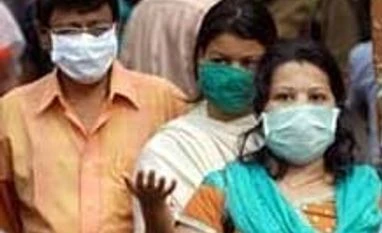 "Delhi hospitals put on alert following swine flu death")

