Home / World News / Dinosaurs were declining long before asteroid strike: study
Dinosaurs were declining long before asteroid strike: study
According to new research, factors like break-up of continental land masses, sustained volcanic activity may have influenced the gradual decline of dinosaurs
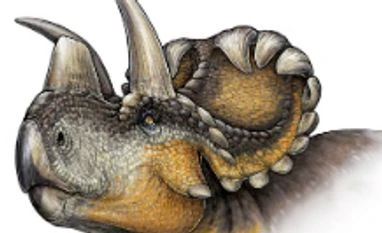
Wendiceratops. Photo credit: Danielle Dufault/Royal Ontario Museum
Dinosaurs were already in an evolutionary decline tens of millions of years before the massive meteorite impact that finally wiped them out 66 million years ago, a new ground-breaking study has found.
The findings provide a revolution in the understanding of dinosaur evolution, researchers said.
Palaeontologists previously thought that dinosaurs were flourishing right up until they were wiped out by a massive meteorite impact 66 million years ago.
By using a sophisticated statistical analysis in conjunction with information from the fossil record, researchers at the Universities of Reading and Bristol in the UK showed that dinosaur species were going extinct at a faster pace than new ones were emerging from 50 million years before the meteorite hit.
While the decline in species numbers over time was effectively ubiquitous among all dinosaur groups, their patterns of species loss were different, researchers said.
For instance, the long-necked giant sauropod dinosaurs were in the fastest decline, whereas theropods, the group of dinosaurs that include the iconic Tyrannosaurus rex, were in a more gradual decline.
"While the asteroid impact is still the prime candidate for the dinosaurs' final disappearance, it is clear that they were already past their prime in an evolutionary sense," said Dr Manabu Sakamoto, from the University of Reading, who led the study.
"Our work is ground-breaking in that, once again, it will change our understanding of the fate of these mighty creatures. While a sudden apocalypse may have been the final nail in the coffin, something else had already been preventing dinosaurs from evolving new species as fast as old species were dying out.
"This suggests that for tens of millions of years before their ultimate demise, dinosaurs were beginning to lose their edge as the dominant species on Earth," said Sakamoto.
"All the evidence shows that the dinosaurs, which had already been around, dominating terrestrial ecosystems for 150 million years, somehow lost the ability to speciate fast enough. This was likely to have contributed to their inability to recover from the environmental crisis caused by the impact," said Mike Benton from the University of Bristol.
It is thought that a giant asteroid's impact with Earth 66 million years ago threw up millions of tonnes of dust, blacking out the Sun, causing short-term global cooling and widespread loss of vegetation.
This ecological disaster meant that large animals reliant on the abundance of plants died out, along with the predators that fed on them.
The new research suggests that other factors, such as the break-up of continental land masses, sustained volcanic activity and other ecological factors, may possibly have influenced the gradual decline of dinosaurs.
This observed decline in dinosaurs would have had implications for other groups of species.
The study was published in the journal Proceedings of the National Academy of Sciences.

 "Dinosaurs were declining long before asteroid strike: study")


 Connect with us on WhatsApp