Draft Innovation policy proposes setting norms for 'ease of doing research'
Benchmarks for 'ease of doing research' will be developed to ensure adequate funds for research activities in India, according to the draft Science Technology Innovation Policy, 2020
Press Trust of India New Delhi Benchmarks for 'ease of doing research' will be developed to ensure adequate funds for research activities in India, increase accountability and make those less bureaucratic, according to the draft Science Technology Innovation Policy, 2020.
It states that apart from the primary activity of doing research, researchers also have to spend a considerable amount of their time and resources on administrative activities related to projects.
Journal paywalls, and lack of data and knowledge-sharing further hampers their ability to freely and easily conduct research activities.
"Benchmarks for 'ease of doing research' will be developed so that research activities are adequately funded, are less bureaucratic and accountability is in both directions, that is the donor and the receiver," the policy states.
"To reduce the administrative burden on the researchers, digital platforms and e-governance will be used for grant management -- all activities from award, funding and utilisation of grants to measurement of research outputs," it states.
International best practices of grant management will also be explored, according to the document.
Besides that, access and sharing of knowledge and resources will be improved through use of online platforms implementing open-data and open-access policy, and by enabling access to journals and databases, the draft states.
It further states that there will be emphasis on connecting the invention and innovation ecosystems.
"Weakness in the invention and innovation ecosystem will be identified to take research into the market and to the community. Both knowledge pull from the invention system as well as knowledge push from the innovation ecosystem are necessary to achieve the goal of a vibrant research and development ecosystem in India," it adds.
The Department of Science and Technology (DST), along with the Office of Principal Scientific Adviser, started the process of formulating STIP, 2020, last year. The policy was to be out by the end of the year, but has been delayed due to the coronavirus pandemic.
The draft STIP has been uploaded by the DST on its website and has also invited suggestions, inputs and comments by January 25 for making changes in it.
(Only the headline and picture of this report may have been reworked by the Business Standard staff; the rest of the content is auto-generated from a syndicated feed.)

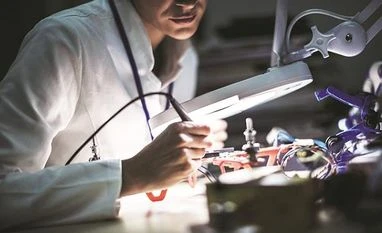 "Draft Innovation policy proposes setting norms for 'ease of doing research'")


 Connect with us on WhatsApp