
Draft National Education Policy ready to be submitted to Centre: Javadekar
The Central government had constituted K Kasturirangan committee to prepare draft for the new NEP 2017
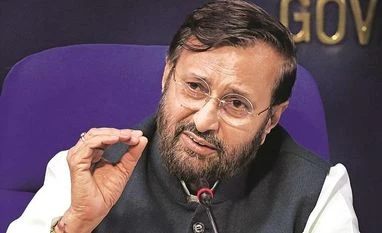 "Draft National Education Policy ready to be submitted to Centre: Javadekar")
WebinarsNew
Deep DiveNew
Explore Business Standard
The Central government had constituted K Kasturirangan committee to prepare draft for the new NEP 2017
A panel tasked with preparing the new National Education Policy (NEP) has completed its work, Union HRD Minister Prakash Javadekar said here Saturday.
He said the draft NEP would be handed over to the Central government "anytime from now".
The Central government had constituted K Kasturirangan committee to prepare draft for the new NEP 2017.
"The panel has prepared the draft of the policy which has five pillars namely accessibility, affordability, equity, quality and accountability", the minister said.
He was speaking at the convocation ceremony of the Goa University here.
"Our committee under K Kasturirangan today only said that the report is ready. They are ready to hand over the national educational policy at any day and any time", he said at the function attended by Chancellor of Goa University and Goa Governor Mridula Sinha.
Javadekar said his ministry will frame a schedule for accepting and implementing the policy.
"This will give a new feeling and a new direction to our education system. We have a long way to go", he said.
TheNEP is aimed at promoting education amongst the common people of the country.
The policy covers elementary to college education in both rural and urban India.
The first NEP was promulgated in 1968 by the government ofthen Prime Minister Indira Gandhi, and the second by then Prime MinisterRajiv Gandhiin 1986.
Javadekar further rued that India lacked in research and innovation, "due to which, many things that are used in the country are foreign-made".
"Indian researchers are everywhere in almost all innovations like iphone, Facebook, Twitter and even Whatsapp kind of Apps. But despite all this, we are just the contributor for innovation. We are not the owners of innovation which should change", he said.
The minister said the culture of innovation should be introduced at the level of schools. "That is the reason we have created 'Atal Tinkering Lab '(Under Atal Innovation Mission) in more than 3,000 schools", he added.
"Under this project, students from class 6 to class 12 can work on 3-D printing, robotics, artificial intelligence and others", he said.
The Union government has also launched 'Hackathon' at the college level wherein problem statements are given to students who are expected to find a solution.
"During the first year (2016), 40,000 students participated in Hackathon while the number of students participating in the event last year (2017) stood at one lakh. This year, around 1.5 lakh students are expected to take part which will be the world's largest hackathon in three years", he said.
The minister said Hackathon is producing results.
"In the first year, 50 products were invented whereas more than 100 innovations happened in the second year. This year more innovations will happen", he added.
Javadekar said innovation is the key for sustainable development of India.
"That is why we have started a programme called Imprint, which is a public research programme. During a first Imprint event, we received 1,500 proposals of which 200 proposals were sanctioned. We are now funding them completely from Rs 20 lakh to Rs 4 crore", he said, adding that the second Imprint also received a tremendous response in the form of 2,000 proposals of which 300 have been accepted.
Meanwhile, the minister said the HRD ministry is planning as many as 2,000 courses catering to professionals, students, professors and even senior citizens under new "Swayam" platform.
"Swayam" is a "anytime, anywhere and learning forever platform", he said.
"(Under Swayam), you will get a chance to learn further even after your formal education is over. You can upgrade your skills. Right from professors to senior citizens, anyone can learn", Javadekar said.
The minister said his ministry waned to built Swayam platform further to incorporate 2,000 courses very soon.
He said the concept of the National Digital Library (NDL) has done away with the need to search books at various colleges and libraries.
"Now you have 1 crore 65 lakh books in your mobile phones and computers in the form of national digital library which are available for free", he said.
He said the government was planning to give access of the digital library to all citizens to spread knowledge.
First Published: Dec 15 2018 | 3:45 PM IST


 Connect with us on WhatsApp