RIC meet in Delhi tomorrow: India, China, Russia to discuss pressing issues
It will be first high-level visit from China to India after Doklam standoff; Sushma Swaraj will hold a meeting with Wang Yi
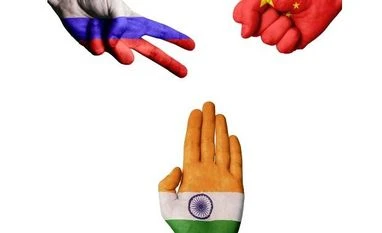
Press Trust of India New Delhi Foreign ministers of Russia, India and China (RIC) will on Monday deliberate on a range of pressing regional and global issues, including ways to tackle the threat of terrorism and extremism, at a key meeting of the trilateral grouping in New Delhi.
It is learnt India will strongly push for strengthening cooperation among the three countries in effectively countering terrorism and naming Pakistan-based terror groups such as Lashkar-e-Taiba and Jaish-e-Mohammed in the RIC communique, citing a similar move by the BRICS grouping.
Before the trilateral talks, External Affairs Minister Sushma Swaraj will hold a meeting with her Chinese counterpart Wang Yi during which a number of major issues are likely to be discussed.
It will be the first high-level visit from China to India after the Doklam standoff.
Swaraj will also hold a meeting with Russian Foreign Minister Sergey Lavrov.
Asked about the meeting between Wang and Swaraj, External Affairs Ministry spokesperson Raveesh Kumar said India expects that the deliberations will cover all bilateral, regional and global issues of importance.
Wang, whose visit here begins this evening, will also meet Lavrov and attend an India-China Cultural evening tomorrow. The Chinese foreign minister will depart early Tuesday morning.
In the RIC, India is also likely to stress on a collective approach by the three countries in ensuring peace and stability in the Indo-Pacific region.
It may also allay apprehension about joining the proposed quadrilateral coalition with Japan, Australia and the US, which was seen as a move to counter China.
Connectivity is set to be a major focus area at the RIC meeting and India is likely to press for speedy implementation of the 7,200 km-long International NorthSouth Transport Corridor (INSTC) linking India, Iran, Afghanistan and Central Asia with Europe.
The RIC foreign ministers' meeting was planned for April here but it had to be postponed as Wang could not confirm his participation due to scheduling problems.
There were media reports then that Wang had put off his visit to India to protest New Delhi's decision to allow the Dalai Lama to travel to Arunachal Pradesh. However, China had dismissed the reports.
The RIC meeting is likely to review the regional security scenario, developments in the Gulf region, situation in Afghanistan and ways to tackle terrorism among others.Enable GingerCannot connect to Ginger Check your internet connection
or reload the browserDisable in this text fieldEditEdit in GingerEdit in Ginger×

 "RIC meet in Delhi tomorrow: India, China, Russia to discuss pressing issues")

