
Govt may ease norms for setting up pumps to get more private fuel retailers
The Oil Ministry has set up an expert committee to recommend easing of fuel retailing licensing rules
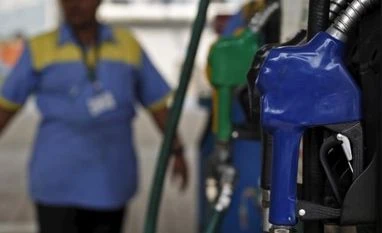 "Govt may ease norms for setting up pumps to get more private fuel retailers")
WebinarsNew
Deep DiveNew
Explore Business Standard
The Oil Ministry has set up an expert committee to recommend easing of fuel retailing licensing rules
The government is mulling relaxing norms for setting up petrol pumps as it is keen on getting more private players into fuel retailing so as to increase competition.
The Oil Ministry has set up an expert committee to recommend easing of fuel retailing licensing rules, the ministry order said.
At present, to obtain a fuel retailing licence in India, a company needs to invest Rs 20 billion in either hydrocarbon exploration and production, refining, pipelines or liquefied natural gas (LNG) terminals.
The expert committee will "look at various issues related to the implementation of existing guidelines for grant of marketing authorisation of market fuels - petrol, diesel and aviation turbine fuel (ATF)," it said.
The panel would include renowned economist Kirit Parikh, former oil secretary G C Chaturvedi, former Indian Oil Corp (IOC) chairman and IIM Ahmedabad Director M A Pathan.
It has been asked to furnish its report within 60 days after due consultations with stakeholders.
The panel will "review the existing architecture and extent of private sector participation in retail marketing of major transportation fuels in the country," the order said.
It will "identity entry barriers, if any, for expansion of retail outlets for private marketing companies."
State-owned oil marketing companies - Indian Oil Corp (IOC), Bharat Petroleum Corp Ltd (BPCL) and Hindustan Petroleum Corp Ltd (HPCL), currently own most of 63,498 petrol pumps in the country.
Reliance Industries, Nayara Energy - formerly Essar Oil and Royal Dutch Shell are the private players in the market but with limited presence. Reliance, which operates the world's largest oil refining complex, has less than 1,400 outlets.
Nayara has 4,833 while Shell has just 114 pumps.
BP plc of UK had a couple of years back secured a licence to set up 3,500 pumps but hasn't yet started doing so. Last week, French energy giant Total in a joint venture with Adani Group announced plans to set up 1,500 petrol pumps in the next 10 years.
IOC is the market leader with 27,325 petrol pumps in the country, followed by HPCL with 15,255 outlets and BPCL at 14,565 fuel stations.
The expert committee will "assess the need, if any, to further liberalise the existing guidelines for authorisation of private sector marketing companies," the order said.
A senior oil ministry official said the government is keen on getting more private players in the arena and is willing to relax investment norms as well as the number of permissions needed for setting up a petrol pump.
The expert group would make specific recommendations on the nature of amendments required to the existing guidelines for grant of a license to private retailers.
The official said more competition would improve services as well as give customer choice. It may also lead to retailers vying with each other to offer the best price.
Currently, the three oil marketing companies are following the same methodology for fixing retail prices, which on almost all occasions are in sync with one another and prices vary by just a few paise.
First Published: Oct 23 2018 | 4:55 PM IST

