RBI, govt 'on same page' on rate panel
Only fine-tuning of monetary policy committee left, says Rajan
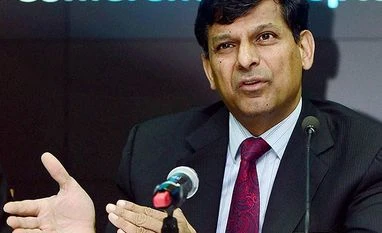
BS ReporterAgencies New Delhi Reserve Bank of India (RBI) Governor Raghuram Rajan on Thursday said the government and the central bank have agreed on the composition of the monetary policy committee (MPC), proposed to decide on interest rate.
“MPC agreement has been largely done. Only fine-tuning is left. The government and RBI are broadly on the same page on the composition of the MPC,” Rajan told reporters here.
Rajan said a final call on the timing of implementing the MPC would be taken by the finance ministry.
The government had proposed setting up an MPC, with representatives of the finance ministry and RBI, to decide on interest rate.
A revised draft of the Indian Financial Code (IFC), released by the ministry in July, had suggested doing away with an earlier proposal of granting the RBI governor veto power and proposed a seven-member MPC to take decisions on changing interest rate by a majority vote.
The proposal had drawn much criticism as the majority of the seven members were to be appointed by the government. RBI would not have a substantial role in MPC, experts had said, even as the main responsibility of keeping inflation in the range of four per cent plus or minus two per cent was on the RBI — as was decided between the apex bank and the finance ministry.
At that time, the finance ministry said the proposal was just a recommendation on IFC by the Financial Sector Legislative Reforms Commission and not the government’s view. Later, it worked with RBI for the constitution of the MPC.
RBI would be given a majority representation in the committee, sources said, but the governor might not have a veto power. He would, however, have a casting vote, which means he would decide the matter in case of a tie.
Now, the government appoints an RBI governor, who controls the monetary policy and has veto power over the advisory committee of RBI members and outside appointees that sets the rates.
The finance ministry had, on October 24, said it had moved a Cabinet note on setting up the monetary policy committee retaining the dominant role of the RBI.
“The government has prepared a Cabinet note on MPC. RBI is a very credible institution and nothing will be done in MPC composition that undermines the role of RBI,” a senior finance ministry official had said.

 "RBI, govt 'on same page' on rate panel")


 Connect with us on WhatsApp