Govt's model bill on water to stress on storage creation
The bill will recommend giving precedence to drinking water supply over allocation of the resource for agricultural and industrial purposes
Press Trust of India New Delhi With vast swathes in several states facing drought-like situation, the Centre is drafting a model bill that would lay stress on creating large-scale rainwater storage facilities, efficient allocation of the valuable resource to states and involvement of the local populace in conservation efforts.
The bill will recommend giving precedence to drinking water supply over allocation of the resource for agricultural and industrial purposes.
Union Water Resources Secretary Shashi Shekhar attributed the current crisis in several states to poor demand-side management of water.
Noting that earlier model bills, with focus on supply-side management measures like dam construction, did not yield desired results, Shekhar said the new legislation will urge states to take steps to recharge depleting groundwater, especially in floodplain areas of rivers. Floodplain is a portion of land, stretching from river banks to the base of enclosing valley walls.
"Model laws were prepared earlier too. But those focused more on supply-side management like how we should construct dams, opt for rainwater harvesting. There was no emphasis on demand-side management like storing water, ensuring its efficient use by prioritising its allocation. This bill will focus on that part," Shekhar told PTI.
Noting that India received rain hardly for 30-35 days during monsoon, he underscored the need for creating storage facilities, particularly underground, to cut losses caused by evaporation, besides conventional reservoirs and storage tanks.
"After storage, the issue is of how efficiently you use water for rest of the year. First priority obviously should be given to drinking water for human and cattle populace and then for agriculture and industries," he said.
The bill, guidelines of which will not be binding on states, will also suggest governments to adopt a cropping pattern based on rainfall received there.
Shekhar cited the example of Maharashtra where sugarcane is grown in some areas which receive scanty rainfall. He said Israel conserved water by cultivating crops which require less water.
"We can follow the Israel model in areas which report lesser rainfall. We can grow vegetables and fruits than sugarcane there with the help of drip irrigation instead of flow irrigation. Flow irrigation causes water wastage," he said.
Laying emphasis no community participation in water management, Shekhar said all successful models in the country have locals contributing by way of handling the resource, changing crop pattern in accordance with average rainfall in the area and supplying water for agricultural purposes efficiently.
"If we want to make the country drought-free on a sustainable basis, then it is a must that communities come to fore. They will come to fore if government takes care of initial risks involved," he said.
Water being a state subject, Shekhar said the Centre's role is to work on long-term solutions with state governments when it comes to dealing with scarcity.

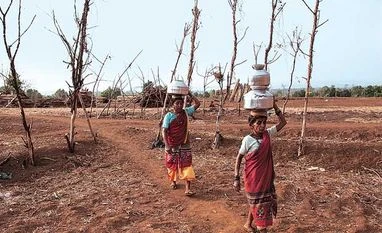 "Govt's model bill on water to stress on storage creation")


 Connect with us on WhatsApp