
GST leading to hawala transaction, input tax credit black money: Amit Mitra
Mitra said he had then opposed such hasty rollout as the computer systems were not prepared to deal with uploading of as many as 3 billion invoices
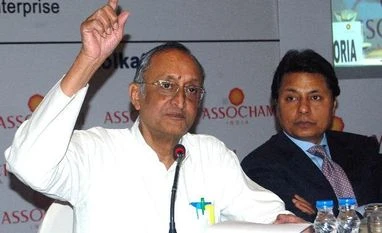 "GST leading to hawala transaction, input tax credit black money: Amit Mitra")
WebinarsNew
Deep DiveNew
Explore Business Standard
Mitra said he had then opposed such hasty rollout as the computer systems were not prepared to deal with uploading of as many as 3 billion invoices
West Bengal Finance Minister Amit Mitra Tuesday said the GST is leading to hawala transactions as businesses are claiming input tax credit and authorities are not matching those claims with invoices.
Stating that Goods and Services Tax (GST) was implemented in haste on July 1, 2017, Mitra said he had then opposed such hasty rollout as the computer systems were not prepared to deal with uploading of as many as 3 billion invoices.
"Today a short (returns) form is being filled and when you do not upload invoices, according to me, today hawala is happening out of GST. If invoice is not required to be uploaded, when you file GSTR-3B then you claim input tax credit (ITC), which is black money because there was no transaction. It was unprepared GST, Mitra said at the 'Agenda Aaj Tak (news channel)' event here.
Under the GST regime, businesses currently file summary sales return GSTR-3B and final sales return GSTR-1.
Initially, when GST was implemented, businesses were required to fill up 3 forms-- GSTR-1 (sales return), GSTR-2 (purchase return) and GSTR-3 (final return which combines both GSTR-1 and 2).
However, businesses complained of difficulties in filing of three returns a month as the GST systems could not accept the last minute rush on the due date of filing those returns.
Following this, the GST Council, chaired by Union Finance Minister and comprising state finance ministers, decided to come out with a summary sales returns form GSTR-3B for businesses to pay taxes by the 20th day of the succeeding month.
The system of filing GSTR-3B and GSTR-1 does not require businesses to upload invoices to match purchase and sales returns.
While GSTR-2 and 3 has been kept in abeyance, the tax authorities are working on simplified returns forms which should be launched sometime in 2019.
"I had said that GST should not be launched on July 1, 2017. Computers were required to process 3 billion invoices, but there was no testing or pilot run," Mitra said.
GST, which amalgamated 17 different central and state taxes including excise duty and sales tax or VAT, not just made India one market by levying a uniform tax rate on a good or service, it also did away with tax-on-tax prevalent in the previous system.
First Published: Dec 18 2018 | 6:30 PM IST


 Connect with us on WhatsApp