Raising concerns over the 7th pay panel's recommendations, industry body Assocham has said it would not be a good economic policy to pay higher salaries to government employees and pensioners by merely depending on tax receipts and disinvestment proceeds.
Hefty increases in wage bill, as recommended by the panel, might also hurt the government's fundings towards infrastructural development, it added.
"Taking into account the Budget for the fiscal 2015-16, the Centre's net share of the entire tax revenue is Rs 9.20 lakh crore and if the Pay Commission report is implemented, as it is, the salary bill of 47 lakh employees and 52 lakh pensioners would shoot up to an alarming figure of Rs 5.27 lakh crore, increasing by Rs 1.02 lakh crore per annum," the chamber said.
The panel had recommended a 23.55% increase in salary, allowances and pension along with a virtual one-rank-one-pension for civilians, involving an additional outgo of Rs 1.02 lakh crore a year.
"No financial structure can be sustainable if much more than half of the revenue is claimed by the wages and salaries. Let us not create a situation where we go on borrowing endlessly to pay for salaries and wages," Assocham Secretary General D S Rawat said.
"We cannot depend on disinvestment or selling the family silver in bluechip PSUs just to pay salaries. This is certainly not a good economic policy. Secondly, how can the salary bill be reckoned from the total tax receipts when some part of it (Rs 5.23 lakh crore) goes to states. The Centre has to pay its employees from its own revenue pool," Rawat said.
The chamber expressed fear that given a tight fiscal situation where there is a pressure of meeting the fiscal deficit target and the huge increase in the wage bill, the development expenditure would take a big bit, making the investment scenario worse.
However, Minister of State for Finance Jayant Sinha had earlier said he was confident that the government will stick to fiscal consolidation laid out in the Budget.
"While the chamber has no reason to disbelieve the Finance Ministry's assertion that the extra burden of Rs 1.02 lakh crore would not lead to increase in the fiscal deficit threshold of 3.9% in FY 2016 and 3.5% in 2017, the question remains then how are the government finances going to be fixed," Assocham said.
Moreover, it said, it would be wrong to reckon the salary bill either from the total budget/total revenue receipts or revenue expenditure.
The recommendations that will benefit 47 lakh central government employees and 52 lakh pensioners will lead to an additional outgo of Rs 73,650 crore from the Union Budget and Rs 28,450 crore from the Railway Budget.
Given the state of the global economy and demand slowdown, it cannot be stated with confidence that the economy would take a turn for a huge improvement in the next four months to coincide with the implementation of the Pay Commission report, the chamber noted.
The suggested wage increase by the 7th Pay Commission, if accepted, will come into effect from January 1, 2016.

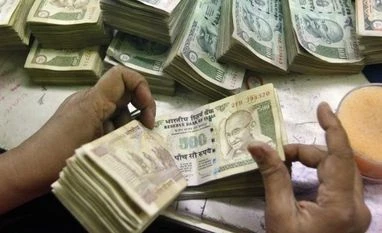 "Hefty pay from tax receipts not good eco policy: Assocham")


