India demands greater share in UN peacekeeping mandates
Says it is regretful that troop contributing countries are not allowed to participate in decisions on drawing up mandates
Press Trust of India United Nations India, among the top troop contributors to UN peacekeeping missions, has termed as "regretful" that non-members of the Security Council, who provide troops, are not allowed to participate in its decisions on drawing up peacekeeping mandates.
"It is regretful that troop-contributing countries which are not members of the Security Council are not allowed to participate in decisions on drawing up of peacekeeping mandates.
"The consequence is detrimental to the effectiveness of the mandates drawn up by the Council. This also leads to a heavier drain on the financial, material and human resources being contributed for peacekeeping," India's Permanent Representative Ambassador Asoke Mukerji said at the C-34 panel (Special Committee on Peacekeeping) meeting here.
India has contributed about 180,000 troops to 44 of the 69 peacekeeping operations mandated so far.
Mukerji stressed that peacekeepers are meant to keep the peace, adding that the creation of peace, which is a political objective, is not the responsibility of peacekeepers but that of the Security Council.
"If the panel finds that the Council has not been able to discharge this responsibility, given to it by the Charter, then we hope that it would recommend implementing early reforms of the Council so that the UN is made 'fit for purpose' in the 21st century," he said.
"The alleged failures of peacekeeping, and proposals for recourse to 'robust' or 'interventionist' peacekeeping, actually deflect attention from the malfunctioning of special political missions and peace-building activities," he said.
He cited the example of South Sudan where, as the Secretary General has said, "there is no peace to keep".
"How can peacekeepers be deployed, and expected to perform their duties, in such a situation is a valid question for the panel to answer," he said.
Mukerji said many dimensions of the multi-dimensional peacekeeping operations being mandated by the Security Council fall into the basket of peace-building.
Issues like monitoring ceasefires, demobilizing and reintegrating combatants and assisting the return of refugees and displaced persons and enhancing human rights protections should not be clubbed with traditional peacekeeping.
"The failure to ensure peace-building activities, generates volatile situations, which peacekeeping is not equipped to handle," he said, citing the example of the situation in the Central African Republic.

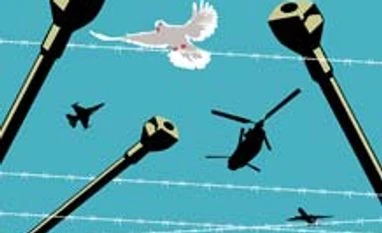 "India demands greater share in UN peacekeeping mandates")


 Connect with us on WhatsApp