
Indo-Gangetic plain global hotspot of atmospheric ammonia: IIT KGP study
This is due to intense agricultural activities and fertilizer production there, according to researchers at The Indian Institute of Technology (IIT) Kharagpur.
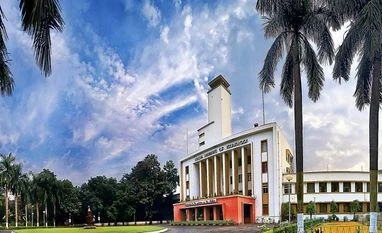 "Indo-Gangetic plain global hotspot of atmospheric ammonia: IIT KGP study")
Explore Business Standard
This is due to intense agricultural activities and fertilizer production there, according to researchers at The Indian Institute of Technology (IIT) Kharagpur.
The Indo-Gangetic Plain (IGP) is the global hot-spot of atmospheric ammonia (NH3) due to intense agricultural activities and fertilizer production there, according to researchers at The Indian Institute of Technology (IIT) Kharagpur.
The study titled "Record high levels of atmospheric ammonia over India: Spatial and temporal analyses" has also been published in the international Elsevier journal "Science of the Total Environment".
The study by the IIT team was conducted along with researchers from Indian Institute Of Tropical Meteorology, Pune and few European researchers.
The team has also recommended wider adoption of precision farming along with seasonal restrictions on the use of fertilizers.
"Agro fertilizers containing high levels of ammonia have long been designated as a hazardous material for human health. In a first-of-its kind study, the seasonal and inter-annual variability of atmospheric ammonia emitted by the agricultural sector was analysed by us and the results are in agreement with the long-held apprehension of global environmentalists - the Indo-Gangetic Plain is indeed the global hot-spot of atmospheric ammonia," said Jayanarayanan Kuttippurath, Professor at IIT Kharagpur's Centre for Oceans, Rivers, Atmosphere.
"The satellite data we collected for agricultural emissions show a positive correlation of atmospheric ammonia with total fertilizer consumption and temperature since high temperature favours volatilization and is negatively correlated with total precipitation as wet deposition helps removal of atmospheric ammonia," he added.
Using IASI satellite measurements to analyze the seasonal and inter-annual variability of atmospheric NH3 over India for the period 20082016, the researchers observed atmospheric ammonia growing rapidly at a rate of 0.08 pc annually during the summer-monsoon (Kharif crop period) season from June to August.
"Atmospheric ammonia is typically generated due to agricultural activities including the use of nitrogenous fertilizers, manure management, soil and water management practices and animal husbandry. It is very dynamic as it is constantly exchanged between the atmosphere and biosphere.
"In India, there has been a lack of detailed information about atmospheric ammonia, which is a significant contributor to atmospheric pollution and deterioration of air quality. This is particularly important for IGP as there are many cities including New Delhi," Kuttippurath said.
The study also mentions that there are positive trends in atmospheric NH3 over the agricultural areas of the United States, China and Europe, about 1.82.61 per cent annually, depending on regions. However, the general trend in atmospheric ammonia over India is negative in most seasons.
"Observing the overall trend, we can therefore assert to have sincere to our pledge at the Paris Climate Summit towards reducing atmospheric emissions through initiatives under the National Clean Air Programme though we have to be relentless in our efforts to reduce the emissions at the Indo Gangetic Plain, which would otherwise have detrimental effects on the human health, ecosystems and climate," said Kuttippurath.
Deliberating on possible remedies, co-authors Ajay Singh and Nirupama Mallick from the IIT Kharagpur's Department of Agricultural and Food Engineering emphasised wider adoption of precision farming along with seasonal restrictions on the use of fertilisers.
"Agriculture, in its conventional form, contributes significantly to the atmospheric emission of gaseous ammonia that plays a key role in the deterioration of air quality over the whole of India by actively contributing to the formation of secondary aerosols. This demands regulations on the amount of fertilizer application in cropping seasons in arable lands, in place of conventional blanket recommendation practices, along with viable strategies to curb farm emissions," said Mallick.
(Only the headline and picture of this report may have been reworked by the Business Standard staff; the rest of the content is auto-generated from a syndicated feed.)
First Published: Dec 03 2020 | 3:06 PM IST

