Calling NJAC unconstitutional was one of the reasons for the face-off between executive, Judiciary, says former attorney general Mukul Rohatgi
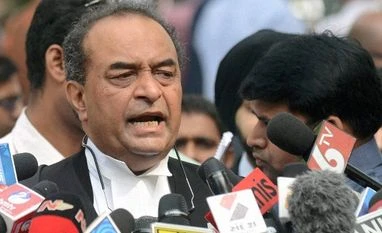
Attorney General Mukul Rohatagi addressing the media outside the Supreme Court after a hearing on the black money case in New Delhi on Wednesday. Rohatagi submitted to the court three sets of documents, which reportedly include names of over 600 peop
Lamenting that the "divide" between the executive and the judiciary is "becoming deeper day by day", former attorney general Mukul Rohatgi has alleged that the judiciary has gone beyond its brief in the last three decades and needs to draw a "lakshman rekha".
He also criticised the Supreme Court's order striking down the National Judicial Appointments Commission (NJAC), calling it unconstitutional and said it was one of the reasons for the face-off between the two pillars of democracy.
Can parliament say "we will decide the cases" as "you (courts) cannot solve" the problem of pending cases? All pillars need to respect each other and draw a 'lakshman rekha', Rohatgi told Rajya Sabha TV in an interview, according to a statement issued by the public broadcaster.
"There has to be a lakshman rekha. It cannot virtually become an overarching situation when courts are running the government, whether you should have music after 10 pm? Is that fair on the part of the courts to decide? Courts need to draw a lakshman rekha," he said.
Rohatgi, who quit as attorney general in June after a three-year tenure, also advocated guidelines for public interest litigations (PILs) as he argued that most of them are motivated because of political and economic rivalries.
PIL is a weapon which needs to be used carefully, he added.
Terming the apex court's decision to annul the NJAC, which sought to give government a say in appointment of judges, as "unconstitutional", he said the law was passed by Parliament and state assemblies and there was no need for the court to strike it down.
He even said that NJAC was one of the major reasons of the face-off between the executive and the judiciary.
"If Parliament says you (courts) keep chiding everybody but you cannot solve the problem of pending cases, then can parliament say we will decide the cases? It will lead to a chaos. It leads to heartburn.
"If Parliament passes laws, they will decide what's good for the people. Courts can't direct Parliament to pass a law," he said.
The divide is becoming deeper and deeper day by day, he said and pitched for dialogue between the judiciary and the executive.

 "Judiciary, executive divide becoming deeper: Mukul Rohatgi")


