Mars absorbed water on its surface like sponge: Study
Basalt rocks on Mars can hold approximately 25% more water than those on Earth
Press Trust of India London The Martian surface may have reacted with and absorbed the water that once flowed on the red planet, making it uninhabitable, scientists suggest.
Although today's Martian surface is barren, frozen and uninhabitable, a trail of evidence points to a once warmer, wetter planet, where water flowed freely.
The conundrum of what happened to this water is long standing and unsolved.
Previous research has suggested that the majority of the water was lost to space as a result of the collapse of the planet's magnetic field, when it was either swept away by high intensity solar winds or locked up as sub-surface ice.
However, these theories do not explain where all of the water has gone.
Convinced that the planet's minerology held the answer to this puzzling question, scientists from the Oxford University in the UK applied modelling methods used to understand the composition of Earth rocks to calculate how much water could be removed from the Martian surface through reactions with rock.
The team assessed the role that rock temperature, sub- surface pressure and general Martian make-up, have on the planetary surfaces.
The results revealed that the basalt rocks on Mars can hold approximately 25 per cent more water than those on Earth, and as a result drew the water from the Martian surface into its interior.
"People have thought about this question for a long time, but never tested the theory of the water being absorbed as a result of simple rock reactions," said Jon Wade, from Oxford, who led the research.
"There are pockets of evidence that together, leads us to believe that a different reaction is needed to oxidise the Martian mantle," said Wade.
"On Mars, water reacting with the freshly erupted lavas' that form its basaltic crust, resulted in a sponge-like effect," he said.
"The planet's water then reacted with the rocks to form a variety of water bearing minerals. This water-rock reaction changed the rock mineralogy and caused the planetary surface to dry and become inhospitable to life," he added.

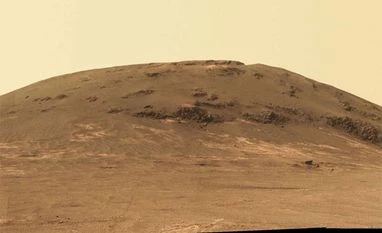 "Mars absorbed water on its surface like sponge: Study")


 Connect with us on WhatsApp