Once called 'Giran-gaon' or the city of (textile) mills, the area around Elphinstone Road and Parel stations in central Mumbai now has a skyline filled with glass-and-concrete towers, housing swanky offices.
But for thousands of office-goers who alight at these two stations after traveling by trains from distant suburbs, crossing the overbridge which links them and leads out to the glittering business district is nothing short of a battle.
Today's tragedy was waiting to happen, said a local resident, as at least 22 people died in a stampede on the overbridge linking Parel on the Central line and Elphinstone Road on the Western line of the suburban train network.
"There is a war-like situation every day here during morning and evening hours. People fight a war to come out or enter the stations," said Arun Tiwari, regional head of a marketing company.
The stampede took place around 10:40 am when the overbridge was teeming with people taking shelter from a sudden downpour.
"Ever since new office buildings have come up in the area, the crowd has increased many times, but nothing has been done to improve the infrastructure at the station. Who is responsible for these deaths?" asked Tiwari, who lives nearby.
"This was waiting to happen. Such things can happen on other (railway) footbridges too," he said.
Echoing him, Satish Paul, a daily commuter, said, the number of people who alight at the two stations has increased phenomenally but infrastructure has not kept pace. He said Infrastructure should be strengthened and basic amenities improved to avoid such disasters in future.
"When I alighted from train, I saw people screaming, piled on one another (on the overbridge). People are in a rush to make it to the office on time for fear of salary getting deducted, so they hurry, putting their lives at risk every morning," said Ravindra, a real estate agent.
For Anita and Babita Kamble, sisters who live in the railway quarters near the overbridge, a spurt in noise outside this morning seemed routine.
"It was around 10:30 am when we heard people screaming. We thought it nothing unusual, as the station is chock-a-block during office hours. But in no time the crowd outside our house swelled. When we came out, we saw people piled on one another on the bridge," said Anita.
Local people ran to their help before police arrived, she said.
The number of commuters who alight at these two stations has grown exponentially because of the new offices in the area, she said.
After the textile mills closed down one by one in the 1980s and 90s, skyscrapers came up in the Parel area, housing offices of multinationals, banks and media firms.
"Development is good and welcome, but we don't need bullet trains, we need better infrastructure. We pay taxes, we pay GST. It's all good, but at least build more bridges," said a young woman who works at a hospital nearby, without revealing her name.

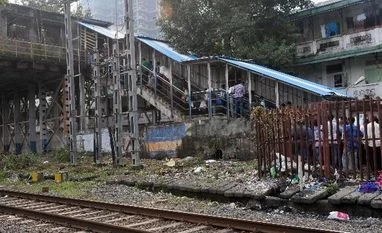 "Elphinstone stampede: Today's tragedy was waiting to happen, say locals")

