
Rising sea level puts Mumbai at risk of being submerged by 2050: Study
According to the researchers, nearly 250 million people around the world currently live on land that may go below water levels during annual floods
 "Rising sea level puts Mumbai at risk of being submerged by 2050: Study")
Explore Business Standard
According to the researchers, nearly 250 million people around the world currently live on land that may go below water levels during annual floods
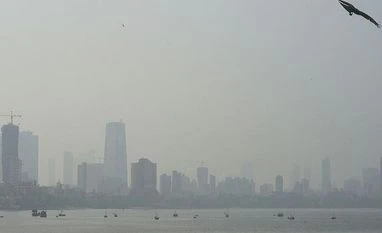
India's financial capital Mumbai, one of the largest and most densely populated cities in the world, is at risk of being submerged by 2050, according to a study that gives new estimates on the impact of rising sea levels.
India and other Asian countries, including Bangladesh and Indonesia, may see a five to tenfold increase in the population living below the projected high tide line by the end of the century, added the study published in the journal Nature Communications,
Published on Tuesday, it put together estimates of future water level rise with current projections of population density increase in major parts of the world.
Much of the southern parts of Mumbai may sink at least once a year below the projected high tide line -- the mark on coastal lands up to which the highest high tide reaches in a year — by mid century, the New York Times said in a report based on the study.
"Built on what was a series of islands, the city's historic downtown core is particularly vulnerable," the NYT said. It also published a series of maps showing parts of Mumbai as well as Bangkok and Shanghai submerged by 2050.
Mumbai has a population of 12.5 million, according to the last census in 2011.
The research was published by Scott A Kulp and Benjamin H. Strauss of Climate Central in the US, a non-profit news organization comprising scientists and journalists that analyses and reports on climate science, and contains new estimates on the impact of rising sea levels.
It noted that three times as many people may be affected as earlier projections estimated.
The scientists used an improved model of coastal elevations across several regions of the world to provide the new estimates of the vulnerability of densely populated low-lying areas to rising oceans at global and national scales.
According to the researchers, nearly 250 million people around the world currently live on land that may go below water levels during annual floods.
By the new estimate, the researchers wrote in the study, one billion people now occupy land that is less than 10 metres above current high tide lines, including 250 million below one metre.
The researchers said eight Asian countries -- China, Bangladesh, India, Vietnam, Indonesia, Thailand, the Philippines, and Japan -- housed more than 70 per cent of the total number of people currently living on affected lands worldwide.
Based on the revised estimates they said India, Bangladesh, Indonesia, and the Philippines may see a five to tenfold change in estimated current populations below the projected high tide line.
By 2050, about 340 million people would settle in places that may be submerged during yearly floods, and up to 630 million by the end of this century, the study noted.
"Even with low carbon emissions and stable Antarctic ice sheets, leading to optimistically low future sea levels, we find that the global impacts of sea-level rise and coastal flooding this century will likely be far greater than indicated by the most pessimistic past analyses," the researchers said.
They cautioned that coastal communities worldwide must prepare themselves for much more difficult times in the future than what is anticipated if current trends of greenhouse gas emissions continue.
"It is difficult to extrapolate such projections and their impacts to more resource-constrained developing nations, though historically, large-scale migration events have posed serious challenges to political stability, driving conflict," the researchers wrote in the study.
Reacting to the study, author Amitav Ghosh said the sea level rise projection for Mumbai is "really scary".
"... shows most of greater Mumbai underwater, including the areas around two nuclear installations. Tens of millions displaced. All this by 2050. Never imagined it could happen in a few decades," he said on Twitter.
Urban ecologist Harini Nagendra from the Azim Premji University expressed dismay at the destruction of mangroves in Mumbai.
"New research shows that the number of people living in coastal cities displaced by flooding by 2050 is 3 TIMES HIGHER than we thought. Most of greater Mumbai is underwater. A great time to build more on the coast, destroy Navi Mumbai mangroves, etc," she said in a sarcastic tweet.
First Published: Oct 30 2019 | 6:50 PM IST

