Amid uncertainty over the upcoming Foreign Secretary-level talks, Army chief Gen Dalbir Singh Suhag today squarely blamed the Pakistani Army for having derailed the peace process a "number of times" in the past.
His remarks came in the backdrop of reports that Pakistani establishment was not on board with their Prime Minister Nawaz Sharif when it came to talks with India.
"It has done it number of times. I am not saying in this (Pathankot) connection..." he said when asked whether he feels that the Pathankot attack was an attempt by the Pakistani Army and the ISI to disrupt the peace process.
There is speculation that the FS-level talks may be deferred with India wanting "prompt and decisive" action against the masterminds of the Pathankot terror attack that left seven soldiers killed and six terrorists gunned down.
Two days after Defence Minister Manohar Parrikar stressed on the need to give back pain inflicted on India by organisations and individuals in the same coin, Suhag asserted that the Indian Army is ready and competent to carry out any task it is entrusted with and "fully prepared" to meet any threat to the country's security.
The Army chief, who was addressing his annual press conference ahead of the Army Day here, also expressed his "concern" at the infiltration along the borders with Pakistan in Punjab but made it clear that the responsibility lies with the BSF which is manning the area.
Suhag also indicated that the six Pakistani terrorists could well have been hiding inside the Pathankot air base as he asserted that no one came in once the Army cordon was placed along the 24 km-long permitere wall.
He said it is a matter of "treason" if the terrorists had used the drug route to get in with local help.
The Chief also rejected allegations about lack of coordination in response to the attack saying there was "complete synergy".
Refusing to comment on whether the FS-level talks should be held this week, the Army chief said it is a diplomatic and political decision.
On Pakistan's role in the attack, Suhag asserted that markings on medicines carried by them along with some of the equipment showed that they were from Pakistan.
He said the evidence has been shared with the Pakistani authorities but details will come out only after the investigation by the NIA.
The General added that the motive of the Pathankot attack was to inflict maximum damage and generate a media hype.
The Army chief said that the security environment facing the nation is becoming more "complex and dynamic" and said that at least 17 terror training camps continue to be active in Pakistani Occupied Kashmir compared to 42 earlier.
He said some of the camps were shut down few years ago due to international pressure.
On the Pathankot terror attack, Suhag said there were "no lack of coordination" and local commanders had complete liberty in planning and execution, of the counter-offensive operation which was carried out under Western Army Commander Lt Gen K J Singh.
His comments came amid questions raised by experts as to why there was multiple change of command and why the NSG, a paramilitary force under the Home Ministry, led the operation.
"As far as the Army is concerned, it was not under anybody's command. It was under the Western Army Commander who was monitoring and controlling the operations on my behalf," Suhag said.
He added that one of the important task at hand was to ensure safety of the assets, the over 10,000 people living at the base and the foreign trainees at the base.
He asserted that contrary to reports, 8 columns of the Army, with about 70 men each, were deployed besides the special forces.
Asked whether the decision to call in the NSG to handle the Pathankot operation was correct or not, he said, "NSG is the best force to deal with hostage situation and it was a good decision."
Assuring the country, he said the Army is highly motivated and ready to respond to any threats to our national security.
"It was a good operation. To ensure less casualties we had to take time to complete operation," he said.
Suhag said he was personally monitoring the operation and was in regular touch with Lt Gen Singh.
The Army Chief said his direction on Pathankot operation was to secure all facilities and personnel, ensure no one escaped and to avoid casualties.
He said that the crisis management committee met before Pathankot attack and he had alerted commanders in Northern and Western sector.
Gen Singh also identified cyber security as the major non traditional challenge for the Army.
About infiltration, Suhag said that the reason why terrorists were using the Punjab border to enter the country was because anti-infiltration grid along the Line of Control in Jammu and Kashmir has been strengthened and is difficult to breach.
On relations with China, he said that face offs on the Line of Actual Control have come down this year from the previous year and that a hotline between the two troops would be set up in few months.

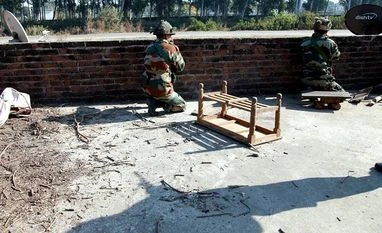 "Pak Army has derailed peace process several times: Gen Suhag")


 Connect with us on WhatsApp