
Chinese alternative threatening traditional Chikan craft of Lucknow
Machine-made Chinese chikan is thriving as it can be produced faster against the handcrafted embroidery, ays Assocham
 "Chinese alternative threatening traditional Chikan craft of Lucknow")
WebinarsNew
Deep DiveNew
Explore Business Standard
Machine-made Chinese chikan is thriving as it can be produced faster against the handcrafted embroidery, ays Assocham
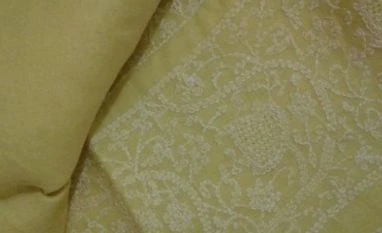
The traditional 'Chikankari' craft of Lucknow is facing tough challenge from China-made Chikan, which is almost 30 percent cheaper and has a shorter production time-span.
Due to the rising competition from Chinese Chikan, the livelihood of about half-million people associated with the largely unorganised Chikan industry in and around Lucknow is in peril, Associated Chambers of Commerce and Industry of Industry of India (ASSOCHAM) today said.
"Lack of awareness together with dearth of skilled manpower is affecting the growth of chikankari as only 5 percent of total production is exported, while the rest is sold in the domestic market," noted the Chamber.
"Machine-made Chinese chikan is thriving as it can be produced faster against the handcrafted embroidery, where timely delivery of end product is of essence as most workers live in the villages around Lucknow," highlighted the ASSOCHAM analysis.
The Chikan industry is highly fragmented and facing significant challenges owing to insufficient market information on export trends, opportunities and prices, scarcity of raw materials, lack of adequate finance and growing competition from mill and factory made products, ASSOCHAM secretary general D S Rawat said.
He suggested there was a pressing need to create awareness about chikankari through promotional methods like brand building, road shows and craft festivals in select countries and also point of sale publicity.
The government facilitation for creation of niche markets for chikan products, opening showrooms and warehouses in target countries according to the market size and import value have been flagged as key suggestions to improve export of chikan products.
"The government in partnership with private sector should encourage integrated enterprise development by providing support services such as local centres for skill training, product adaptation, vocational training and entrepreneurship development," suggested ASSOCHAM.
Further, the state should offer disadvantaged artisans and craft producers access to global markets, besides full support from product development and manufacturing to export marketing.
First Published: Jan 13 2016 | 3:36 PM IST


 Connect with us on WhatsApp