Saudi Arabia's deputy crown prince, Mohammed-bin-Salman, who leads an economic reform drive at home, left for talks in the US on Monday, an official media said.
The visit comes with the longstanding US-Saudi relationship strained by greater American energy independence and last year's international nuclear agreement with Riyadh's regional rival Iran.
The decades-old relationship has been based on an exchange of American security for Saudi oil.
Prince Mohammed, 30, who is also defence minister, will hold talks with US officials on strengthening bilateral relations and discussing regional matters of mutual interest, the Saudi Press Agency said without giving details on the programme of the visit or its duration.
The prince, King Salman's son, was accompanied by a ministerial delegation including Finance Minister Ibrahim al-Assaf and Commerce and Investment Minister Majid-al-Qasabi.
Prince Mohammed is the main architect of a wide-ranging Vision 2030 plan released in April to diversify the kingdom's economy away from oil.
On the eve of his departure, Prince Mohammed chaired a meeting of the Council for Economic Affairs and Development, the Gulf state's main economic coordination body.
At the heart of Vision 2030 is a plan to float less than 5% of state oil firm Saudi Aramco on the stock market.
The proceeds would become part of the world's largest state investment fund, with $2 trillion in assets.
Profits from the fund would help economic diversification and provide an alternative to oil revenues that have fallen by about half since 2014.
This month, San Francisco-based Uber announced that the Saudi Public Investment Fund has pumped $3.5 billion into the ride-sharing giant.
The move signals a more aggressive global investment presence by the kingdom under its economic restructuring programme. Uber is a smartphone app that connects passengers and drivers around the world.
Prince Mohammed has risen to be among Saudi Arabia's most influential figures since being named second-in-line to the throne last year.
His visit to Washington come after Central Intelligence Agency chief John Brennan said on Saturday that secret findings of a 2002 congressional investigation into the 9/11 terror attacks should not be taken as evidence of official Saudi complicity.
A decision is expected soon on whether to release a classified 28-page section of the report by the House and Senate intelligence committees.
Riyadh insists it has nothing to fear from release of the pages.
Fifteen of the 19 Al-Qaeda plane hijackers were Saudi nationals. Their attacks on September 11, 2001 killed nearly 3,000 people.

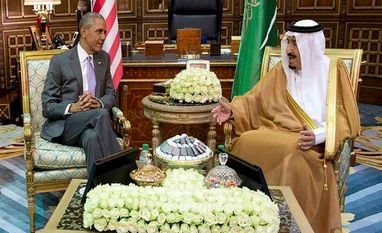 "Powerful Saudi prince visits US")


 Connect with us on WhatsApp