
RBI issues revised Prompt Corrective Action framework for banks
Capital, asset quality and leverage will be the key areas for monitoring in the revised framework, the RBI said
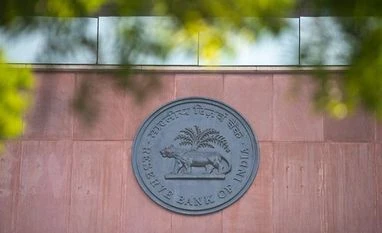 "RBI issues revised Prompt Corrective Action framework for banks")
WebinarsNew
Deep DiveNew
Explore Business Standard
Capital, asset quality and leverage will be the key areas for monitoring in the revised framework, the RBI said
The RBI on Tuesday issued a revised Prompt Corrective Action (PCA) framework for banks to enable supervisory intervention at "appropriate time" and also act as a tool for effective market discipline.
Capital, asset quality and leverage will be the key areas for monitoring in the revised framework, the RBI said.
The revised PCA framework will be effective from January 1, 2022.
"The objective of the PCA Framework is to enable Supervisory intervention at an appropriate time and require the Supervised Entity to initiate and implement remedial measures in a timely manner, so as to restore its financial health," the central bank said.
The PCA framework is also intended to act as a tool for effective market discipline.
The central bank also stressed that the PCA Framework does not preclude the Reserve Bank of India from taking any other action as it deems fit at any time, in addition to the corrective actions prescribed in the framework.
"Indicators to be tracked for capital, asset quality and leverage would be CRAR/Common Equity Tier I Ratio, Net NPA Ratio and Tier I Leverage Ratio, respectively," according to the revised framework.
Breach of any risk threshold may result in invocation of the PCA.
The framework will apply to all banks operating in India, including foreign banks operating through branches or subsidiaries based on breach of risk thresholds of identified indicators.
"A bank will generally be placed under PCA framework based on the Audited Annual Financial Results and the ongoing Supervisory Assessment made by RBI.
"RBI may impose PCA on any bank during the course of a year (including migration from one threshold to another) in case the circumstances so warrant," it said.
The framework also details conditions for exit from PCA and withdrawal of restrictions.
If a bank is put under the PCA, several restrictions are placed on it.
The restrictions are imposed on dividend distribution and remittance of profits, bringing in the capital (in the case of foreign banks), branch expansion, and capital expenditure.
The framework was last revised in April 2017.
(Only the headline and picture of this report may have been reworked by the Business Standard staff; the rest of the content is auto-generated from a syndicated feed.)
First Published: Nov 02 2021 | 6:57 PM IST


 Connect with us on WhatsApp