A passport found near the body of one of the Stade de France suicide bombers may have belonged to a Syrian regime soldier killed several months ago, a source close to the investigation said.
The passport is in the name of Ahmad al-Mohammad, born September 10, 1990 in the Syrian city of Idlib.
French investigators say all indications point towards the fact he was a soldier loyal to Syrian President Bashar al-Assad.
The source, who spoke on condition of anonymity to AFP, said the passport was either taken or fabricated based on a real identity.
It was registered on the Greek island of Leros on October 3, and was seen again in Serbia and Croatia in the following days.
Both Greece and Serbia are on the so-called Balkan migrant route used by more than 800,000 people desperately fleeing war and misery this year.
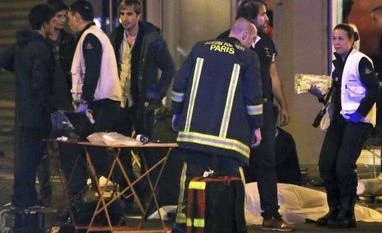
The passport was found near the body of one of the three suicide bombers who blew themselves up outside the Stade de France national stadium north of Paris on Friday.
Several far right political groups across Europe have presented its discovery as an argument against welcoming migrants into Europe.
German Interior Minister Thomas de Maiziere also said it appeared to be a red herring planted by IS.
"There are indications it is a false trail," he said, adding that "it still cannot be ruled out that a terrorist headed for Europe and to France, probably via Germany."
De Maiziere said the person named in the passport had been registered in Greece, Serbia and Croatia, when usually many migrants seek to avoid registration as they head toward central EU countries such as Germany.
He also said it was not certain the passport was authentic, and that "there was information yesterday that another passport with the same name ... Had been registered in Serbia", held by another person.
"It therefore remains to be determined whether it was a refugee sent by IS to Europe to carry out an attack, or whether it is a cunning chess move by the IS, which laid this trail in order to scare people," the minister said.
The discovery of the passport fuelled a call by France's anti-immigration National Front leader Marine Le Pen for an "immediate halt" to new arrivals, while Germany's xenophobic PEGIDA movement drew thousands to their latest anti-Islam rally.

 "Suicide bomber passport 'may have belonged to Syrian soldier': Sources")

