'Yet to retire' Tata Nano ends 2019 with zero production, sales of 1 unit
According to a regulatory filing by the company, Tata Motors had zero production and sales of the Nano in December 2019 while it produced 82 units and sold 88 units in December 2018.
Press Trust of India New Delhi Tata Motors did not produce a single unit of its entry-level car Nano in 2019 although it sold just one unit in February even as the company is yet to officially retire Ratan Tata's "people's car".
According to a regulatory filing by the company, Tata Motors had zero production and sales of the Nano in December 2019 while it produced 82 units and sold 88 units in December 2018.
Similarly, in November 2019 there was zero production and sales of the entry-level model, whereas in the year-ago period it produced 66 units and sold 77 units.
In October 2019 also, according to the filing, it did not produce or sell any unit of the Nano while in the year-ago month it rolled out 71 units while selling 54 units.
In the first nine months of 2019 also Tata Motors did not produce a single unit of Nano.
The company did not sell a single unit in any month last year except February when it sold just one, according to several regulatory filings by the company.
Tata Motors has so far been maintaining that no decision has been made yet on the future of the Nano saying production planning of a car is a "conscious management of demand, system inventory and planned efficiencies".
It has, however, admitted that in its current form the Nano will not meet the new safety regulations and BS-VI emission norms.
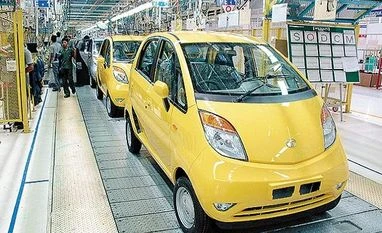
Tata Motors had unveiled Nano in January 2008 at the Auto Expo with much expectations of being "the people's car", as dubbed by the then Tata group chief Ratan Tata. However, it could not live up to the billing with sales dwindling over the years.
On the issue of discontinuing the Nano, the company has been insisting that "decisions on product life cycle is a holistic view taken after considering the market developments, regulations and emerging competitive landscape. Any such decisions are announced as and when it's taken".
Company officials had, however, hinted that production and sales of the Nano would stop from April 2020 as Tata Motors has no plans to invest further on the model to meet strict emission norms under Bharat Stage-VI, which come into effect from April 1 this year and other safety regulations.
The Nano was launched in the market in March 2009 with an initial price of close to Rs 1 lakh for the basic model despite cost escalations, with Tata insisting that "a promise is a promise".
However, from the beginning, Nano courted trouble. It was originally planned to be rolled out from Tata Motors' proposed plant at Singur in West Bengal, where it faced intense political and farmer protests against land acquisition. The company had to shift its production to a new plant at Sanand in Gujarat.
Instances of the car catching fire initially after it was launched didn't help its cause either. Tata had admitted that the company made the mistake of promoting the Nano as 'the cheapest car'.
It became a loss-making model for Tata Motors with ex-Tata Sons chairman Mistry, who was abruptly removed from the post, even claiming that the Nano "consistently lost value, peaking at Rs 1,000 crore".
Mistry also termed the Nano one of the "legacy hotspots" and there was "no line of sight to profitability for the Nano, (or) any turnaround strategy".
He had also claimed that Tata Motors did not stop producing the car due to "emotional reasons".

 "'Yet to retire' Tata Nano ends 2019 with zero production, sales of 1 unit")


 Connect with us on WhatsApp