
UK to pay divorce bill only if EU agrees on future trade deal: Brexit Secy
UK Prime Minister Theresa May had agreed in December to a financial settlement totalling $46-51 bn that ministers said depended on agreeing on future trade ties
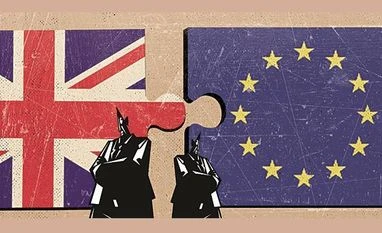 "UK to pay divorce bill only if EU agrees on future trade deal: Brexit Secy")
WebinarsNew
Deep DiveNew
Explore Business Standard
UK Prime Minister Theresa May had agreed in December to a financial settlement totalling $46-51 bn that ministers said depended on agreeing on future trade ties
Britain will only pay its EU divorce bill if the bloc agrees on the framework for a future trade deal, the new Brexit Secretary warned in an interview published Saturday.
Dominic Raab, who replaced David Davis after he quit the role earlier this month in protest over the government's Brexit strategy, said "some conditionality between the two" was needed.
He added that the Article 50 mechanism used to trigger Britain's imminent exit from the European Union provided for new deal details.
"Article 50 requires, as we negotiate the withdrawal agreement, that there's a future framework for our new relationship going forward, so the two are linked," Raab told the Sunday Telegraph.
"You can't have one side fulfilling its side of the bargain and the other side not, or going slow, or failing to commit on its side.
"So I think we do need to make sure that there's some conditionality between the two." The British government has sent mixed signals so far on the divorce bill.
Prime Minister Theresa May agreed in December to a financial settlement totalling 35-39 billion pounds ($46-51 billion, 39-44 billion euros) that ministers said depended on agreeing on future trade ties.
But cabinet members have since cast doubt on the position.
Finance minister Philip Hammond said shortly afterwards he found it "inconceivable" Britain would not pay its bill, which he described as "not a credible scenario".
The country is set to leave the bloc on March 30, but the two sides want to strike a divorce agreement by late October in order to give parliament enough time to endorse a deal.
Raab met the EU's top negotiator Michel Barnier for the first time on Friday, where he heard doubts over May's new Brexit blueprint for the future relationship.
But Barnier noted the priority in talks should be on finalising the initial divorce deal.
A hardline stance by the British government on the financial settlement could complicate progress, with Raab insisting on the link with the bill and a future agreement.
"Certainly it needs to go into the arrangements we have at international level with our EU partners," he told the Telegraph.
"We need to make it clear that the two are linked." May's plans formally unveiled in early July envisages a customs partnership for goods and a common rulebook with the EU.
It has faced severe criticism in Britain, including from within her own cabinet and Conservative Party.
Former foreign secretary Boris Johnson and Davis both resigned in opposition.
A new YouGov poll published by the Sunday Times showed just 12 per cent of people backed the proposals as "good" for Britain while 43 per cent thought they were "bad".
First Published: Jul 22 2018 | 10:18 AM IST


 Connect with us on WhatsApp