US Defence Secretary to visit in June to ink defence agreement
Also on the agenda will be the nearly $2.5-billion deal for 22 Apache and 15 Chinook heavy-lift helicopters
Press Trust of India New Delhi The new US Defence Secretary Ashton Carter will be visiting India in June and will sign the enhanced Defence Framework Agreement for the next ten years between the two countries.
Also on the agenda will be the nearly $2.5-billion deal for 22 Apache and 15 Chinook heavy-lift helicopters besides taking forward the talks on proposed co-development and co-production of military technology, ranging from aircraft carrier launch systems to mini drones.
Pointing out that India and US are tracking some 77 different line of effort that came out of President Barack Obama's visit here, US Ambassador to India Richard Verma said, "We have re-energised or launched 30 new initiatives, 30 different dialogue".
He said that the US Embassy here has every element of American government and at any given day, they are interacting with some element of the Indian government, adding "we are not going to let the momentum go".
"I think that is a very good thing and a very positive thing. We are not going to let the momentum go and and we are not going to slow down what has been accomplished," he said, adding that he was looking forward to the next high-level dialogue between the two governments in June.
He said Carter will be here in early part of June and US was looking at signing a new 10-year defence agreement, agreed to during Obama's visit.
"We are looking to do more in terms of exercises and joint training, interoperability with our Indian counterparts and hopefully provide more in terms of increasing India's indigenous capability to make defence products right here in India," he said at the first US-India Think Tank Summit.
Verma said that during Obama's visit, both countries have reoriented how they cooperate with each other.
He said it was not just about cooperation in South Asia but both countries now have a "very robust architecture" for East Asia as well.
He said the two countries will work together on maritime cooperation, keeping sea lanes open, combating weapons of mass destruction, supporting humanitarian assistance to disasters as well as increasing trade and economic integration across Asia.
"The strategic premise of that is that if US and India are the closest of partners, not just in South Asia, but across Asia and globally, the world would be a safer and more prosperous place. That is the power of having two large democracies coming together. There is so much good that can come out of it," he said.

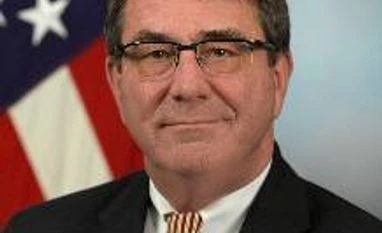 "US Defence Secretary to visit in June to ink defence agreement")


