
US stance on CPEC will have 'no impact' on the corridor, says Pakistan FM
In-charge of South Asia affairs at the US State Department, Alice Wells, last week said that the CPEC would take a toll on Pakistan's economy in future
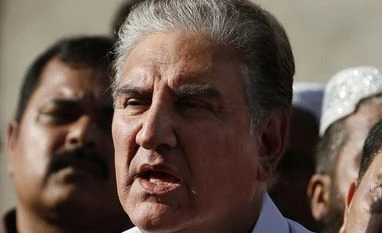 "US stance on CPEC will have 'no impact' on the corridor, says Pakistan FM")
WebinarsNew
Deep DiveNew
Explore Business Standard
In-charge of South Asia affairs at the US State Department, Alice Wells, last week said that the CPEC would take a toll on Pakistan's economy in future
Pakistan's Foreign Minister Shah Mahmood Qureshi has asserted that the US view on the China-Pakistan Economic Corridor (CPEC) will have "no impact" on the ambitious project, after a senior Trump administration official warned Islamabad that the project would take a toll on the cash-strapped country's economy.
The CPEC is a planned network of roads, railways and energy projects linking China's resource-rich Xinjiang Uyghur Autonomous Region with Pakistan's strategic Gwadar Port on the Arabian Sea.
The project was launched in 2015 when Chinese President Xi Jinping visited Islamabad and it now envisages investment of over $60 billion in different infrastructure projects of development in Pakistan.
In-charge of South Asia affairs at the US State Department, Alice Wells, last week said that the CPEC would take a toll on Pakistan's economy in future.
She made the remarks while responding to a question Thursday during her appearance at the Wilson Center think-tank in Washington.
"I think what CPEC exemplifies is what happens when you de-link investment and development from established best practices and infrastructure development," Wells said.
According to Wells, there's been a tendency to conflate the CPEC with grant assistance rather than understanding it to be the loans, and loans not at concessional rates, that it is.
"We want China to be a responsible supporter and funder of infrastructure. No one country can do that. We all need to help work to ensure that countries have meaningful choices for sustainable and quality infrastructure, Wells said.
"What I think we all need to question and where we all need to push is, why isn't China adopting international standards?" Wells asked.
Responding to another question, Wells said that United States does not feel threatened by the CPEC.
"I don't think the United States is feeling threatened. We're very proud of the long history of military to military cooperation that we've enjoyed with Pakistan," she said.
Talking to the media in his home town of Multan, Qureshi rejected the US' "concerns", saying that the vital project would continue.
"Pakistan does not agree with that view. We have rejected that view," Qureshi said. "We do not think that the burden of the CPEC will increase our debt burden."
He said that the CPEC would not increase the debt burden of Pakistan as out of the country's total debt burden is $74 billion, the CPEC related debt was just $4.9 billion.
His comments followed those of Special Assistant to the Prime Minister on Information and Broadcasting Dr Firdous Ashiq Awan and Minister for Planning and Development Asad Umar. Both of them rejected the statement of Wells.
Chinese ambassador to Pakistan Yao Jing on Thursday rejected the US' concerns, saying that the CPEC was immensely helping Pakistan.
"Pak-China relations were based on 'win-win cooperation' and were mutually beneficial for both countries. If Pakistan was in need, China would never ask it to repay its loans in time, whereas, the International Monetary Fund (IMF), which is mainly governed by the West, was strict in its repayment system," he said.
Yao dismissed the Washington's warning to Islamabad over Beijing's giant infrastructure push which was heralded as a game-changer by both Asian countries.
"In 2013, when Chinese companies were establishing power plants in Pakistan, where was the US? Why it did not invest in Pakistan's power sector despite knowing that the country was in dire need of electricity, he asked.
First Published: Nov 25 2019 | 4:00 PM IST


 Connect with us on WhatsApp