WTO impasse due to unreasonable posturing by rich nations: FM
Says to keep the peace clause alive till the dispute is settled with regard to the stock holding
Press Trust of India New Delhi Blaming "unreasonable posturing" by some developed countries for impasse at the WTO talks, India today said it is not opposed to trade facilitation pact but wants the present system for holding food stock to continue till a permanent solution is found.
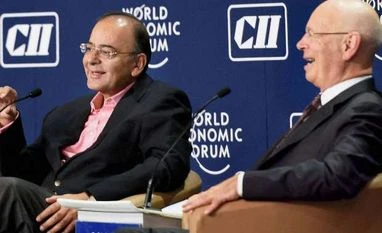
"India is certainly not opposed to trade facilitation. Let me make it very clear... We are agreeing to a multilateral arrangement on trade facilitation but please keep the peace clause alive till the dispute is settled with regard to the stock holding," Finance Minister Arun Jaitley said at the WEF meet here.
Under the peace clause, a WTO member gets immunity against penalty for breaching the food subsidy cap. As per the WTO norms, a developing nation can provide food subsidy of up to 10% of the total farm output.
"Please agree to the peace clause coexisting with the settlement of the dispute. That's all...," Jaitley said.
He added that the food stock holding arrangement, which is being calculated on the prices of 1986-87, itself appears to be unreasonable.
"The peace clause would vanish in four years. Now all that we have requested is the settlement of dispute with regard to the food stock holding and the peace clause must continue to coexist. Therefore till you resolve that issue, India should not be taken to the dispute redressal mechanism. The peace clause must coexist.
"So the dispute is not with regard to trade facilitation. Trade facilitation has become a victim because of unreasonable posturing by some countries...," he said, adding that while the trade facilitation pact was negotiated timely, there is no time frame for a decision on food stock holding.
"It may take a much longer time to arrive at that arrangement but the peace clause and the impact of the peace clause in simple language is that if India does not restrict its food stock holdings it will be taken to dispute mechanisms at the WTO," he said.
India has made it clear that it would not ratify the trade facilitation agreement until a permanent solution was found on the food security issue.
New Delhi had asked WTO to amend the norms for calculating agriculture subsidies so that the country could continue to procure foodgrains from farmers at minimum support price and sell them to poor at cheaper rates without violating the norms.
The current WTO norms limit the value of food subsidies at 10% of the total value of food grain production. However, the quantum of subsidy is computed after taking into consideration prices that prevailed two decades ago.
There are apprehensions that once India would fully implement its food security programme it may breach the cap.

 "WTO impasse due to unreasonable posturing by rich nations: FM")


 Connect with us on WhatsApp