Asian shares surged on Thursday, taking their cue from Wall Street, after the Federal Reserve left US interest rates unchanged and slowed the pace of future hikes, slugging the dollar and lifting commodity prices.
MSCI's broadest index of Asia-Pacific shares outside Japan advanced 0.9 per cent in its sixth straight session of gains, just 1.1 per cent off its one-year high touched earlier this month.
Australian shares rose 0.9 per cent, while South Korea's KOSPI advanced 1 per cent.
Asia's strong gains follow a surge of 1.1 per cent for the S&P 500, 0.9 per cent for the Dow Jones industrial average and 1.3 per cent for the Nasdaq Composite, which closed at a record high.
"The market got what it expected/wanted," said Daniel Morris, senior investment strategist at BNP Paribas Investment Partners in London. "Another dose of central bank support for markets following the Bank of Japan meeting."
While Tokyo was on holiday on Thursday, stocks closed up 1.9 per cent on Wednesday after the BOJ's shift to targetting a positive yield curve, a move that was considered bullish for banks, insurers and pension funds.
The US Fed did signal it could hike rates by year-end as the labour market improved further, but cut the number of rate increases expected in 2017 and 2018. It also reduced its longer-run interest rate forecast to 2.9 per cent from 3 per cent.
That left investors feeling any tightening would be glacial at best. Market pricing for a December move rose only a fraction to 59.3 per cent, from 59.2 per cent, according to CME Group's FedWatch tool.
Richard Franulovich, an analyst at Westpac, noted that back in June the median dot plot showed five hikes to end-2017. Now it is down to just three.
"We do not feel that the dollar has the wherewithal to make a more concerted run higher in the next few weeks," he added. "The FOMC is unlikely to deliver anything more than a very 'dovish' December hike."
The dollar rose as high as 101.71 yen after the BOJ's announcement on Thursday, but the yen took back its lost ground after the BOJ's shift to yield curve control left some unimpressed. It was down 0.1 per cent at 100.155 yen, having lost 1.4 per cent on Wednesday to touch a 3-1/2 week low of 100.30.
"Fundamentally, it did not amount to an easing of monetary policy, but merely offers policy tweaks at the margin and a strengthening of forward guidance," said Frederic Neumann, co-head of economic research at HSBC.
"The BOJ now essentially promises to purchase JGBs for even longer, until inflation exceeds, and not merely meets, its 2 per cent inflation target."
The dollar index, which tracks the greenback against a basket of six major peers, slipped 0.2 per cent to $95.462. It touched a six-week high of 96.333 on Wednesday, before ending the day down 0.4 per cent from its previous close.
The euro was little changed at $1.1191, after gaining 0.3 per cent on Wednesday.
CENTRAL BANKS STILL TRYING
Another central bank struggling with too-low inflation is the Reserve Bank of New Zealand and it renewed a pledge to lower rates again on Thursday even as much of the domestic economy is growing briskly.
The RBNZ's blunt statement that further easing would be needed knocked the local dollar down half a US cent to $0.7340, but the market has found it hard to sell a currency that still offers an overnight interest rate of 2 per cent.
In commodity markets, gold traded down 0.2 per cent at $1,333.20 an ounce, having climbed 1.7 per cent as the US dollar declined on Wednesday.
Oil prices climbed as much as 3 per cent on Wednesday after a third surprise weekly drop in US crude stockpiles boosted the demand outlook in the world's largest oil consumer.
Another supportive factor was an oil workers' strike in Norway, which threatened to cut North Sea crude output.
US crude (WTI) futures advanced 0.9 per cent to $45.72 after surging 4.4 per cent on Wednesday. Brent crude futures rose 0.8 per cent to $47.23, adding to gains of 2.1 per cent on Wednesday.

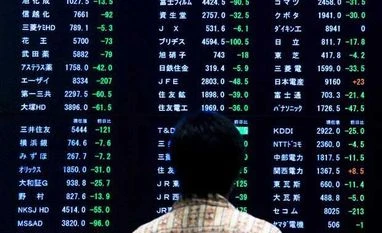 "Asian shares surge, dollar lags on slow-motion Fed")


 Connect with us on WhatsApp