
End of the road for Delhi's old cars as India battles smog
The ruling hits up to a third of the 8.4 million motorbikes, trucks, cars and auto-rickshaws that ply in Delhi
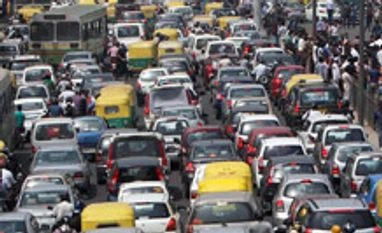 "End of the road for Delhi's old cars as India battles smog")
Explore Business Standard
The ruling hits up to a third of the 8.4 million motorbikes, trucks, cars and auto-rickshaws that ply in Delhi
The National Green Tribunal has banned all vehicles older than 15 years from the streets of the capital, New Delhi, in a bid to clean up air that one prominent study this year found to be the world's dirtiest.
The ruling hits up to a third of the 8.4 million motorbikes, trucks, cars and auto-rickshaws that ply the traffic-choked roads of Delhi and its surrounding areas, transport officials estimate.
Cities across the world are ordering older vehicles off the road or restricting private car use to tackle growing air pollution. Mexico City introduced a ban on older vehicles driving on Saturdays this year, while in March, France briefly enforced the most drastic traffic curbs in 20 years.
"It is undisputed and in fact unquestionable that the air pollution of ... Delhi is getting worse with each passing day," the National Green Tribunal ruled in a judgment last week banning older vehicles from city streets.
Vehicular emissions are the cause of close to three-quarters of Delhi's air pollution, the Delhi government estimates, and a World Health Organization study of 1,600 cities released in May found India's capital had the world's dirtiest air. India rejected the report.
The ban in Delhi lacks incentives to encourage drivers to trade in their older vehicles but eventually could boost sales for carmakers like Maruti Suzuki India and Tata Motors, as the capital accounts for 17% of India's new car sales, said IHS automotive analyst Puneet Gupta.
In Russia, sales of the Lada car have grown thanks in part to a state scheme that provides cash incentives to buy new cars if people sell their old ones for scrap.
Critics of the Delhi ruling say it is largely unenforceable, and will do little to tackle pollution in a city where 1,500 new vehicles roll onto the roads every day.
"Polluting vehicles occur in all different vintages, not just older cars," said Anumita Roychowdhury at the Delhi-based Centre for Science and Environment.
She said authorities should introduce testing of vehicles for pollution levels, and raise taxes on more polluting vehicles to discourage their use.
"You really need to scale up public transport and you need to reduce the overall volume of vehicles on the road," she said.
First Published: Dec 04 2014 | 12:58 PM IST


