
Euro slips after Paris attacks as yen and Swiss franc sought
Even before the attacks, the euro had been under pressure from expectations the ECB will step up monetary easing next month
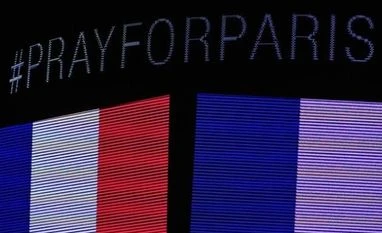 "Euro slips after Paris attacks as yen and Swiss franc sought")
WebinarsNew
Deep DiveNew
Explore Business Standard
Even before the attacks, the euro had been under pressure from expectations the ECB will step up monetary easing next month
The Swiss franc, another traditional safe-haven currency rose, gained 0.3 percent against the euro, while the one-month euro/dollar implied volatility, a key gauge of how sharp swings in the currency is likely to be, jumped nearly 5 percent to trade at around 12 percent..
Broad risk sentiment across global markets was also hit as oil and commodity prices fell while European shares were in the red.
Still, analysts judged the reaction to the heightened worries stemming from the attacks in Paris has been rather muted, with investors likely to focus on increasing central bank divergence between the European Central Bank and the Federal Reserve in due course.
Even before the attacks, the euro had been under pressure from expectations the ECB will step up monetary easing next month, possibly cutting interest rates deeper into negative levels and buying more assets under its quantitative easing programme.
The euro fell 0.3 percent to $1.0740, not far from last week's 6 1/2-month low of $1.0674, having retreated almost 7 percent from its Oct. 15 peak of $1.1495.
The common currency also fell to as low as 130.66 yen, its lowest since late April. It last stood at 132 yen, slightly lower on the day.
"There is some caution ruling markets as we have seen with the reaction to stock markets. Ultimately, the Fed/ECB divergence will be the focus, with markets already pricing in a 10 basis point deposit rate cut by the ECB and extension of the QE programme," said Manuel Oliveri, FX strategist at Credit Agricole.
Martin Enlund, chief FX strategist at Nordea, said the Paris attacks are likely to lead to a rise in the risk premium for the euro. And, in the longer term a hit to business and consumer sentiment would depend on how sharply risk sentiment sours.
France launched air strikes in Islamic State positions in Syria on Sunday as police in Europe widened their investigations into the coordinated Paris attacks.
"Geopolitical risk is heightened, with France already taking responses. That I think should have negative implication on the euro/yen," said Shunsuke Yamada, chief FX strategist at Bank of America Merrill Lynch in Tokyo.
The yen showed muted response to data that showed Japan's GDP slipped more than expected in July-September, the second consecutive quarter of economic contraction.
The numbers were within market expectations and will not significantly change Japan's policy outlook, said Minori Uchida, chief FX strategist at Bank of Tokyo-Mitsubishi UFJ.
First Published: Nov 16 2015 | 3:19 PM IST


 Connect with us on WhatsApp